


“You can’t wing it or outsource it, even at the CEO level. You need to work at it daily — so AI learns you and you learn AI.” —Jim VandeHei, CEO, Axios

At this point I have driven nearly 100,000 miles using Tesla’s Full Self-Driving, and I have become so used to it that flying somewhere presents a problem. I like having my own car at my destination rather than relying on Uber, but if I rent anything other than a Tesla, I barely trust myself to drive it anymore. I have gotten that accustomed to the car that drives itself.
I know some people (though fewer by the day) who insist they would never trust self-driving technology. Usually, they change their mind after one ride. “I could never” suddenly becomes “I need this.”
In a world being remade by AI, more CEOs are starting to have similar experiences. AI has already transformed the work of programmers, technical writers, designers, and other specialists. But its applications to the core responsibilities of the CEO are less obvious. What does it actually mean to use AI to become a better chief executive?
As I wrote last week, AI and the CEO job share an unusual characteristic: both are so broad in scope that figuring out what to do in the first place is a significant challenge. Give a CEO a powerful general-purpose AI tool, and there are a thousand ways to put it to work. Many of those applications have little to do with the CEO’s own responsibilities.
This has created an interesting divide among early adopters. I know CEOs who have become extraordinarily proficient with AI, using it daily to perform complex technical work. But I’m increasingly convinced that some of these enthusiastic adopters are overlooking the applications that could make the greatest difference in their performance as CEOs. Meanwhile, another group is beginning to develop an entirely different way of running their companies with AI assistance. I believe the gap between these groups is going to become much more consequential over the next few years.
The 3 types of CEOs
When a new technology comes along, some people jump in early, tolerate its imperfections, and invest time learning how to use it. Others wait for the technology to mature, avoiding the inconvenience and expense of being an early adopter.
The determining factor, for me, is conviction. If I have doubts about whether a technology will become important, I’m comfortable letting others experiment with it. But when I believe something is going to fundamentally change the way business is conducted, I want to get good at it as soon as possible.
I think it’s clear to all of us that AI is in the former category. While most CEOs I know share that conviction, I increasingly notice three distinct approaches to personal adoption:
1. The halfhearted laggard
These CEOs are using AI daily, but mostly for low-level or routine tasks. It’s their new Google. They understand they should probably be doing more, but they aren’t super interested in taking next steps, or they lack the confidence to explore it on their own.
2. The enthusiast
These CEOs are all-in on AI. They use it daily and have mastered sophisticated capabilities, sometimes including coding entire applications, building websites, producing marketing materials, or analyzing large amounts of functional data. They consider themselves early adopters, and by most measures they are.
3. The CEO-focused early adopter
These CEOs are directing AI’s capabilities at the peculiar responsibilities of the chief executive. They use it to improve strategic thinking, prepare for board meetings, assess their executive teams, monitor competitors, anticipate problems, and challenge their own decisions.
I personally know several CEOs in that second category, who have gone deep into AI. Some are building whole apps or full websites, developing sophisticated tools, and doing other technical work that would have required a specialist just a few years ago. This is genuinely cool stuff.
But is this adding to the CEO’s effectiveness as CEO, or is it giving them the illusion of productivity without helping them lead the organization? Much of the typical CEO’s AI activity — from basic tasks like summarizing meetings to grand experiments in building — has little to do with the actual responsibilities of the CEO.
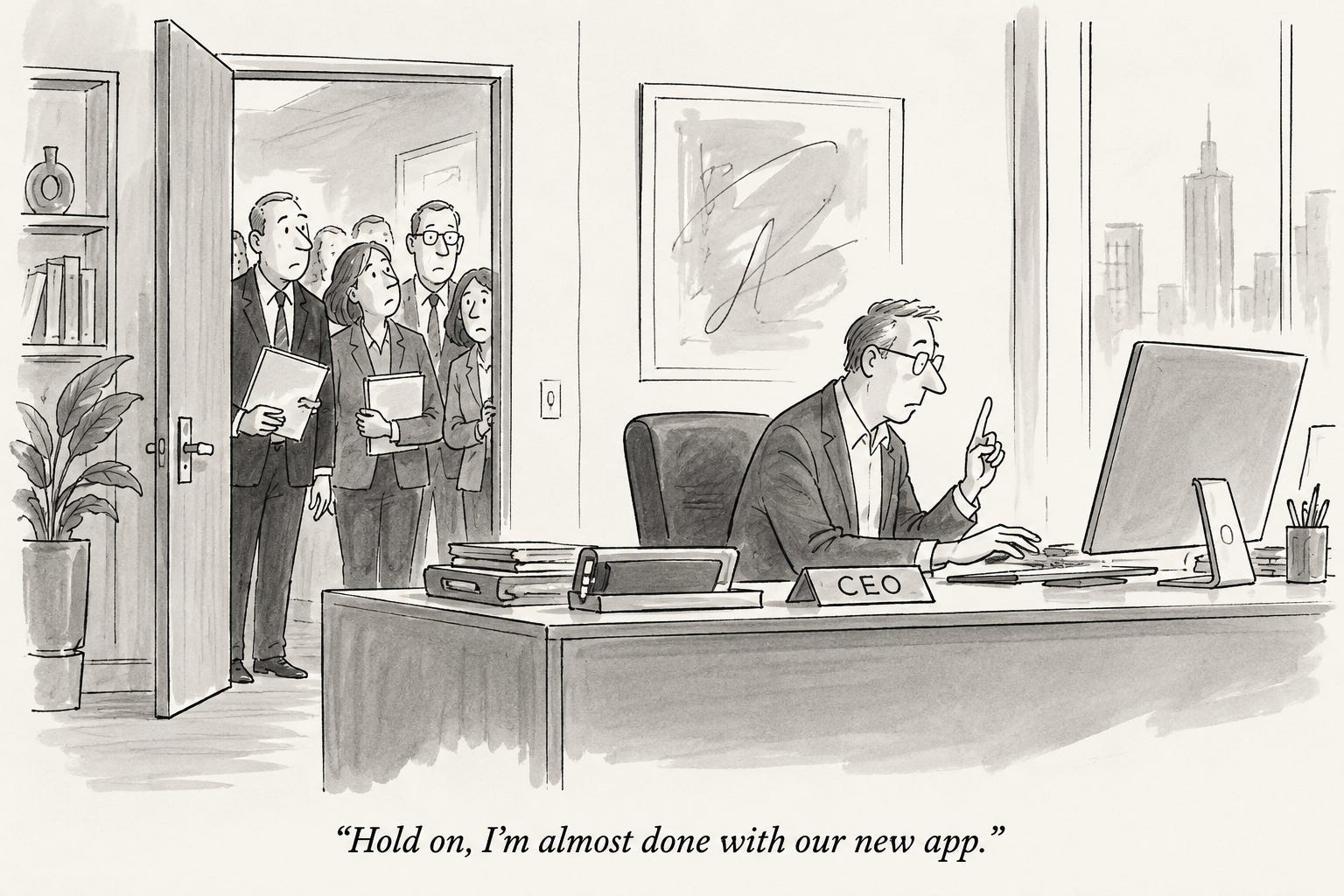
In a company of any significant size, the chief executive should have people responsible for building software, analyzing functional data, and producing marketing materials. The CEO is responsible for setting the company’s direction, allocating resources, building an effective executive team, and making sure the organization delivers on its commitments. I wonder how many of these AI enthusiasts have devoted comparable attention to using the technology to improve their performance in those areas.
There’s evidence that business leaders are still concentrating their personal AI use on relatively routine activities. A 2026 survey by General Assembly and EZRA found that among more than 500 business leaders, 69% used AI to search for information, 68% to summarize documents, and 58% to draft emails. Just 27% used it for scenario planning, and the same percentage for organizational design. Meanwhile, BCG reports that only 15% of CEOs are generating meaningful value from AI.
There’s no question in my mind that it is the third group of early adopters, those applying AI to the fundamentals of the CEO job, who will see the greatest return. We’re beginning to see AI systems capable of providing robust CEO-specific support, drawing on detailed knowledge of the company and its management processes plus frameworks for how CEOs create value.
Five CEOs who are applying AI to the CEO job
We are beginning to see fascinating examples of chief executives putting AI to work on their own responsibilities. Here are some of my favorites:
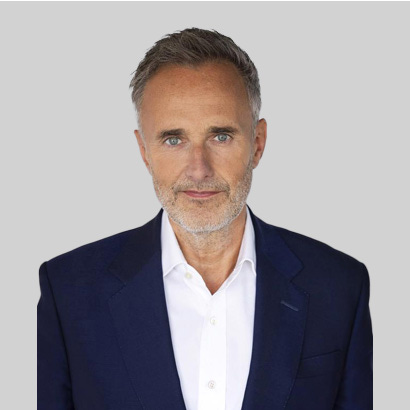
1. Robin Vince, BNY
Seeing the whole business and deciding where to focus
Robin Vince runs BNY, America’s oldest bank, with approximately 46,000 employees. In an August interview with Axios, he described a use of AI that gets at one of the CEO’s most fundamental responsibilities: understanding the business as a whole.
The CEO occupies a unique position in the organization. Every functional executive is responsible for a particular area of the business, but the CEO alone is responsible for the enterprise in its entirety. The CEO must understand how the functions interact, balance their competing priorities, and make decisions that optimize the performance of the whole company. That requires maintaining a perspective that no individual functional leader can provide.
Vince sees an extraordinary opportunity for AI here. As he observes: “There’s no person who can see the picture as completely.” By drawing on information from across the organization, AI can help the CEO understand the relationships, tensions, and tradeoffs among its functions, including connections that might otherwise go unnoticed.
Vince is also using that broader understanding to decide how to spend his own time. His AI “coaches me at the beginning of the day, with how I should approach my day proactively.” This is enormously valuable, and something I’m working with CEOs on as well. A CEO has tremendous freedom to choose how to spend the day, which is one reason so many fall into a pattern of constant firefighting. An AI that understands both the CEO’s responsibilities and the company’s current circumstances can help identify where the CEO’s personal attention will make the greatest difference.
These two capabilities reinforce each other. The more complete the AI’s understanding of the business, the better it can help the CEO decide where to focus.
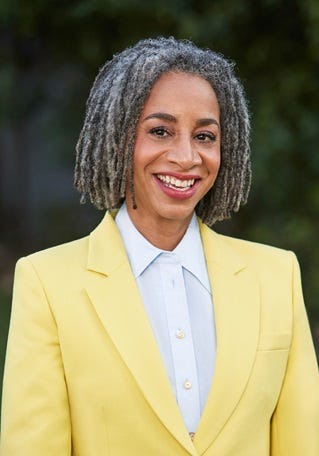
2. Carla Vernón, The Honest Company
Keeping the board relationship strong
Carla Vernón became CEO of The Honest Company in 2023 and led a difficult turnaround involving shrinking margins, limited cash, and pressure to demonstrate profitability. She has also become an enthusiastic AI user.
In an interview with Harvard Business Review, she described spending her spring break exploring tools and developing AI agents for her own use. One of those agents helps prepare her for biweekly meetings with her board chair:
One of the things that I do now is for my meetings with my board chair, which are every other week, I have AI prepare a summary of our recent performance results, the outlook as we’re looking ahead, and some key themes that my board chair and I want to pick up every time we talk. Now I don’t have to write that report. AI gives me the first draft.
This is an example of taking what we all recognize as a core AI capability (summarizing notes and data) and applying it where it matters most to the CEO, in this case her relationship with the board chair. That distillation of companywide results into key themes relevant to the board is a great example of a CEO who understands the AI advantage.

3. Jim VandeHei, Axios
An operating system for the CEO
Axios CEO Jim VandeHei has spent the past year making himself an AI test subject. In his “Confessions of an AI Lab Rat,” he says:
On a personal level, I use ChatGPT or Claude for one to two hours daily, usually in the early mornings, and control an AI personal operating system via my phone. That’s connected to an always-on computer that runs several agents, including one that scans daily for CEO-related data and trends.
A personal operating system for the CEO — music to my ears! VandeHei’s experimentation gives him firsthand knowledge of what the technology can accomplish and where it still struggles. That knowledge is extremely valuable for someone responsible for directing an organization’s AI strategy. He also explicitly points to the problem of shallow AI usage by many CEOs:
You need to go beyond chat. The life-changing work happens in projects or with agents. You need to feed in files of information and direct it with specific skills on how you want it to write, think, fact-check and cite actionable research and intel. This is where your company is headed. Only by doing it yourself will you discover new ways to apply it internally. And you can't delegate this. Your team copies what you do, not what you mandate. Adoption rises and falls based on whether the CEO is hands-on, especially at smaller orgs.
Amen.
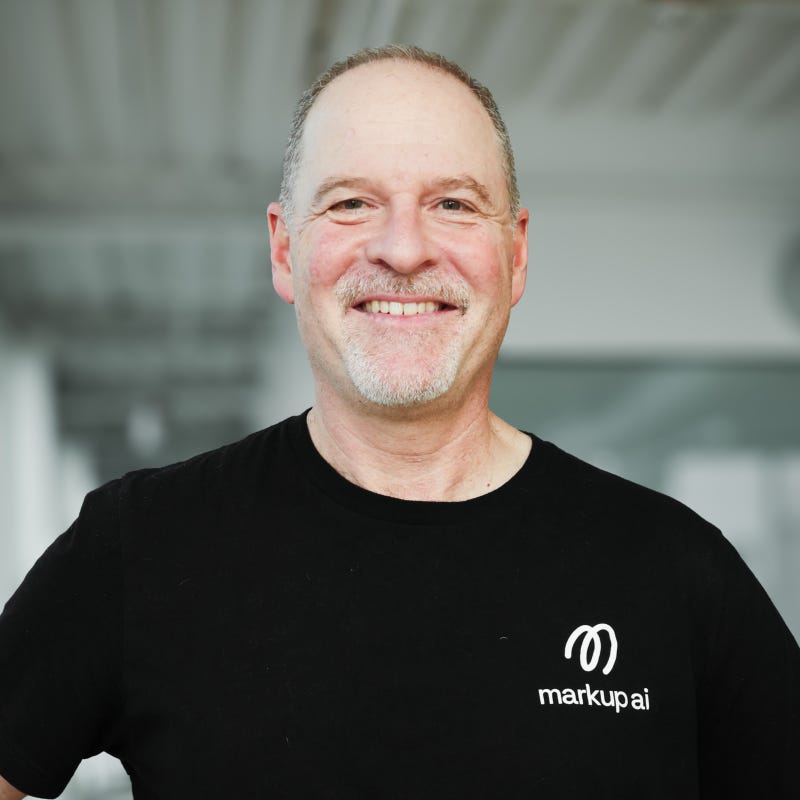
4. Matt Blumberg, Markup AI
A virtual board of directors
Matt Blumberg has taken another approach that I find particularly interesting. The CEO of Markup AI constructed what he calls a “fantasy board of directors,” populated by AI versions of 15 prominent thinkers and business leaders, including Warren Buffett, Steve Jobs, and Oprah Winfrey.
As Fortune reported, Blumberg and his executive team created approximately 5,000-word profiles for the individual personas using publicly available material. They then combined those perspectives with information about their company.
Blumberg uses this virtual board to examine strategic proposals, prepare for presentations, and anticipate questions from his actual directors. He even asked it to give him a 2025 performance review, which he found surprisingly insightful. The entire system reportedly took just an hour or two to create.

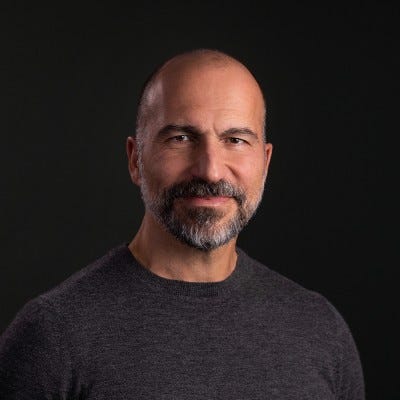
5. Dara Khosrowshahi, Uber
Rehearsing for the CEO
A story from Uber CEO Dara Khosrowshahi illustrates another fascinating application: using AI to simulate conversations with senior executives.
In an interview, Khosrowshahi revealed that some of Uber’s engineering teams have built a “Dara AI.” Before presenting a proposal to the real CEO, employees can rehearse their presentation with an AI version of him.
Think about the potential of that practice. Employees preparing major proposals can pressure-test their arguments, anticipate objections, and refine their presentations before consuming executive time. The same principle works for the CEO preparing to speak with an investor, negotiate with an important customer, deliver difficult feedback to an executive, or present an unpopular decision to the board.
I am a big believer in rehearsing important conversations. AI makes it possible to do this repeatedly, with different personalities, objections, and scenarios, whenever the CEO has a few minutes available. It is one of the simplest ways I know to make a consequential conversation more productive.
The window is still open
Every CEO I talk to uses AI. But smart applications like the above — and many others — are still something of a rarity. More common is AI used as a better search engine, a quick summarizer, a drafter of low-stakes emails. All good stuff. But even a CEO who becomes exceptionally proficient with AI for peripheral activities can still be late to adopting its most consequential applications to their specific role.
Every CEO should be asking how AI can strengthen the five fundamental responsibilities of the job: owning the vision, providing resources, building the culture, building a decision-making organization, and delivering performance. Those activities determine the success of the enterprise. Improvements in the CEO’s ability to perform them can create extraordinary value.
I want to help more CEOs have the experience I’ve had with Tesla: the moment when an unfamiliar technology becomes something you use so naturally, and find so valuable, that you can scarcely imagine going back. That is an advantage worth pursuing today. Because within a few years, running a company without a powerful AI operating system will seem essentially unthinkable.
See what an AI operating system can do for you
We built ChatCEO around the responsibilities of the chief executive, drawing on nearly 20 years of CEO education and the Chief Executive Operating System.
ChatCEO is a private AI coach and virtual chief of staff that develops a structured understanding of your company’s strategy, organization, goals, and operating cadence. It helps you prepare for important meetings, monitor competitors, evaluate strategic decisions, rehearse difficult conversations, and stay focused on the work that matters most.
My invitation is simple: See what it can do when AI is applied directly to the CEO job. Learn more about ChatCEO here.