


Welcome to a Sunday edition of Managing the Future.
Upgrade to a paid subscription and for a limited time get a set of my two CEO books: The CEO Tightrope and The Chief Executive Operating System.
Subscriber or not, you can also try out our AI agent built to help you build your 1-Page Strategic Plan.
Access it here:

Klarna: An Aggressive AI Adopter
A lot of companies claim to be AI-forward. Swedish buy-now-pay-later (BNPL) company Klarna has really gone all in.
It partnered with OpenAI early and was the first fintech company to launch a ChatGPT plugin.
It famously said its AI tools were “doing the equivalent work of 700 full-time agents” following a sweeping 2022 layoff.1
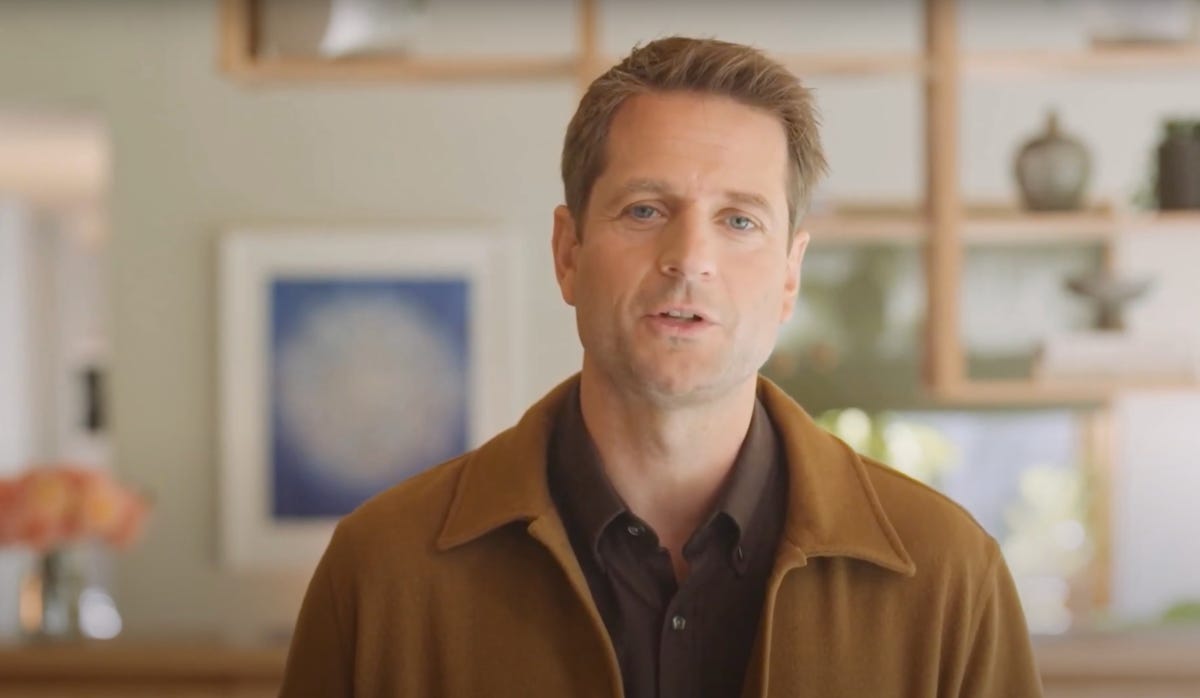
And you probably saw the below video of Klarna CEO Sebastian Siemiatkowski talking about Q1 financial performance.
Except it’s not Siemiatkowski. It’s an AI avatar.
“We went too far.”
As Klarna touted these pioneering applications of AI, the big benefit declared was, predictably, cost-cutting. They estimated a $40 million profit improvement in 2024 directly from AI.
However, Klarna also reported that customers were being served much better. Klarna said of its AI:
It is on par with human agents in regard to customer satisfaction score.
It is more accurate in errand resolution, leading to a 25% drop in repeat inquiries.
Customers now resolve their errands in less than 2 mins compared to 11 mins previously.
That brings us to this month, when in a surprising pivot, Siemiatkowski admitted that the company is rebuilding its human customer support team. Turns out, the almost wholly AI interactions were giving customers a worse experience. Said Siemiatkowski:
As cost unfortunately seems to have been a too predominant evaluation factor when organizing this, what you end up having is lower quality.
Klarna’s still big on AI, and its workforce won’t likely go back to pre-2022 levels, but it looks like a focus on human-delivered quality customer support is back on the table.
My Take: It’s a Classic Case of Stakeholder Imbalance
I think it shows good leadership that Siemiatkowski is being transparent about the issue and course-correcting, but could the misstep have been avoided?
I think so, if Klarna had taken into account the simplest and best model of organizational leadership. That model boils down to the fact that the business must consistently deliver value to three core stakeholder groups: customers, employees, and shareholders. We can visualize this as a triangle. Neglect any corner of the triangle over time and the business will fail. It’s the proverbial three-legged stool: remove a single leg and the whole thing topples over.
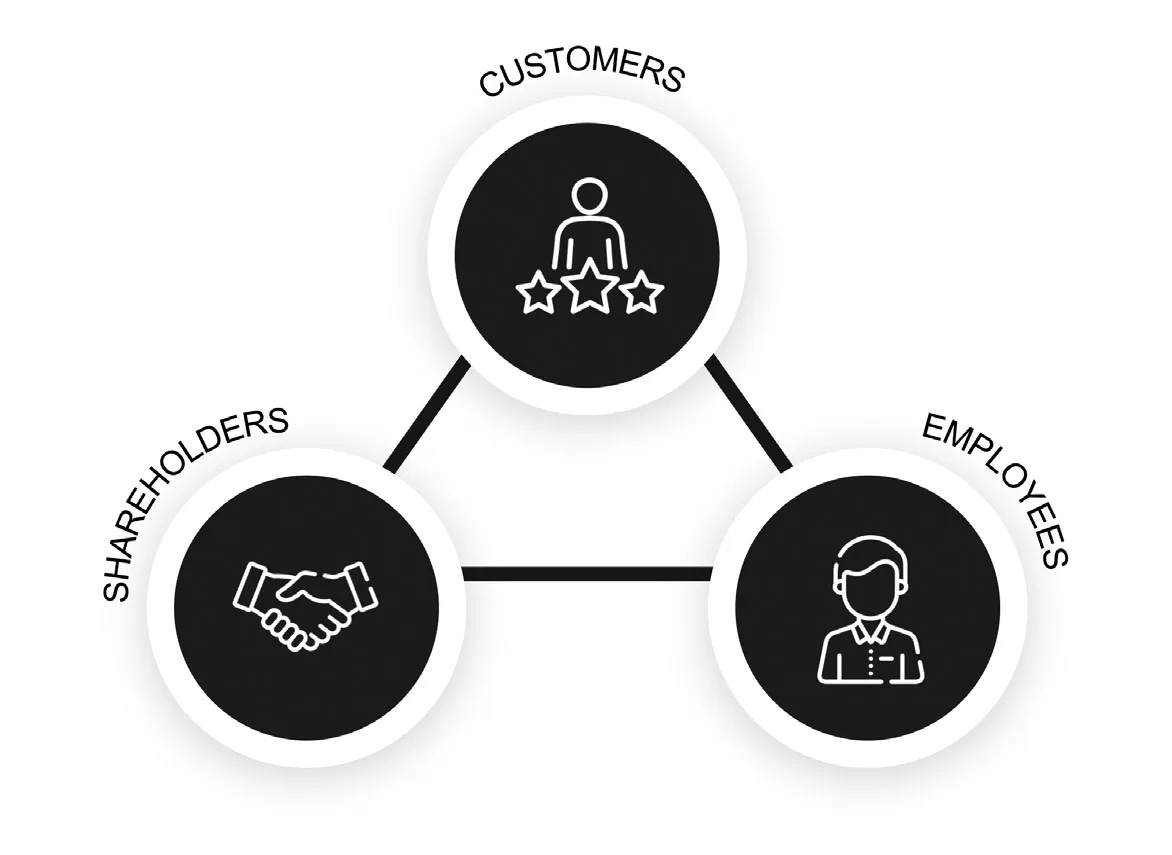
It’s evident from Klarna’s statements at the time—and it’s also clear that Siemiatkowski sees this now, in retrospect—that decision-making around AI rollout was heavily tilted toward the shareholder corner of the triangle.
As a shareholder, you see dropping headcount and 40% higher profits and you’re quite happy the company is so AI-forward.
But what about customers?
In this case, there was lip service paid to how great the AI was for customers, but Klarna’s leadership didn’t go a level deeper and understand what customers actually wanted or what their real experiences felt like.
That’s another leadership lesson here, that metrics can lie. I don’t doubt that Klarna found that with AI customers could “resolve their errands in less than 2 mins compared to 11 mins previously.” But there was more to this picture. The quality of AI-led customer service didn’t just drop recently. Those issues were there initially, but because the value delivered to shareholders outweighed the value delivered to customers, the triangle became unbalanced.
Takeaways for the CEO
Considering the “triangle of tension”—customers, employees, and shareholders—is a reliable way to ensure you’re being effective as CEO. Balancing the stakeholders at each corner requires finesse and judgment.
Be OK making each stakeholder group a little unhappy. Reality is such that neither customers, employees, or shareholders can get all of what they want. You must deliver consistent value to each, and that’s going to mean each is going to be slightly dissatisfied they aren’t getting all the resources, all the attention. CEOs must acclimate to this discomfort.
You can’t even appear to be a partisan. You might think you consider all three stakeholder groups and aren’t biased toward any one, but the feelings in your heart of hearts don’t matter if your actions convey partisanship for one of the groups.
Step in to each group’s shoes. Stay there for a while. Rather than convincing yourself that any one stakeholder group is happy by ginning up some vanity metrics, really understand how your decisions affect them. Their support engagement might go from 11 minutes to 2, but how do they feel after it? Do they think this is a better system than what you had before? Practice strategic empathy and really get into each group’s mindset.
Share your reasoning. When you make decisions that you believe balance the three stakeholder groups, describe your decision-making process in those terms. Tell people what trade-offs and tensions you were working to balance and why you think this course of action is the one that’s best for the business overall. It helps people see that you’re considering the business holistically, not favoring one stakeholder over another.
Bottom line: Kudos to Klarna for recognizing the issue and rebalancing the triangle. Their pivot gives us all an occasion to think about how we’re managing stakeholders in our own business.
Shares of French telemarketing company Teleperformance fell on that announcement, showing just how antsy the call-center industry is about AI.