


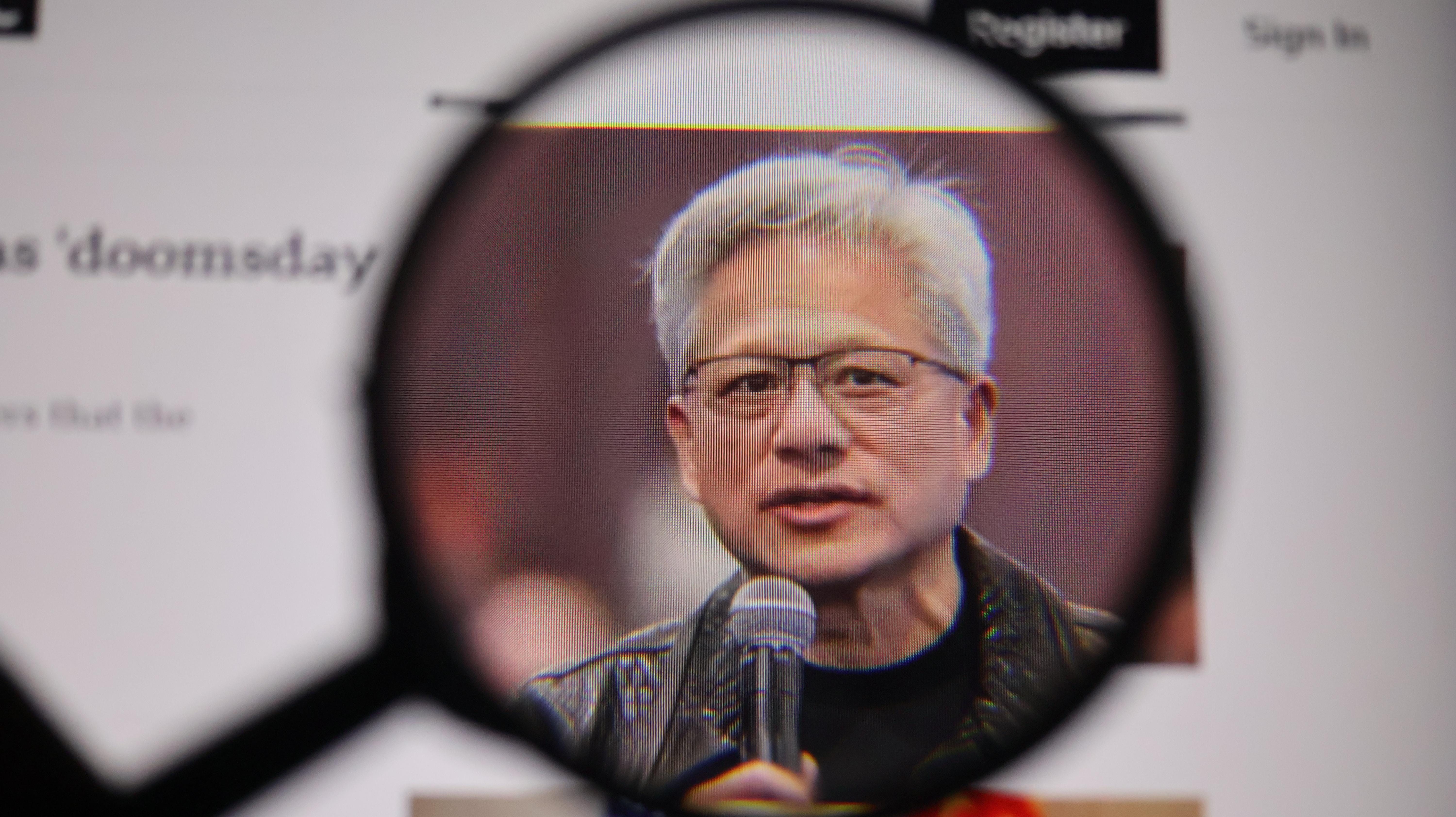
Jensen Huang is back. Are you surprised?
Personally, I felt that last week would be an excellent time to buy up Nvidia shares in advance of his re-hiring. Despite the details straight out of a spy thriller, and despite claims the board had ruled out a return, I couldn’t imagine the board not ultimately making this call.
Jensen Huang is synonymous with Nvidia and has been for 33 years. As Ben Thompson wrote at Stratechery last week, we are not talking about a “normal” company. “Huang organized Nvidia as an exoskeleton around one man: himself.” When you have the US economy yoked to that company’s success to the degree it is, it seemed like a no-brainer.
Much of the commentary since the scandal broke has been about Huang. Today I want to look at it from the other side of the table, the ten folks on the board.
You’re Getting Sued Either Way
Consider the choice the directors faced that Wednesday. They knew that whatever call they made, litigation was coming.
If they kept Huang, they had a CEO who had admitted a relationship with a suspected foreign intelligence asset, at a company whose ability to sell its products abroad depends on Washington’s trust, and who had reportedly been involved with a subordinate, which is about as clear a code-of-conduct problem as exists. Shareholders had already filed a securities class action. A derivative suit filed on the eve of his departure accused the directors of repeatedly deferring to Huang and “consciously ignoring red flags” for more than a year. Keeping him would have handed the plaintiffs their next exhibit. (And the company lacked insurance for its own securities liability.)
But if they removed Huang, they were separating the company from the man most of Wall Street considered to be the company. Nvidia had already lost hundreds of billions of dollars in market value that week, and on the morning his resignation was announced the stock fell as much as 14 percent. Within days, Altimeter and Atreides, funds holding about $2 billion of Nvidia stock, were publicly urging the board to slow down and keep Huang’s return on the table. An online petition to reinstate him passed 190,000 signatures, nearly 10,000 of them from people identifying as Nvidia employees. President Trump publicly backed him.
They of course chose the latter option, took harsh criticism for doing so, and then reversed. A big mess, but understandable when you consider the impossibility of the dilemma.
Put Yourself on the Stand
What would you have done? Try putting yourself in the witness chair. I have run this exercise in my head more than once this month:
“Mr. Trammell, when you voted to remove Jensen Huang, did you believe that was in the best interest of the shareholders?”
Does booting a founder the market valued at hundreds of billions of dollars serve the people who own the company? If you say no, you have admitted to breaching your duty as a director. But if you say yes, the follow-up is waiting:
“What analysis did you do to reach that conclusion?”
This is where it gets even stickier. Is there really a case that shareholders are better off with a Jensen-less Nvidia? The attorney isn’t asking you about misconduct. We all know CEOs shouldn’t be having relationships with subordinates. The question is what the company is worth without Huang, and who will run it on Monday morning in a way that creates more value for shareholders than an embattled Huang could?
With the clock ticking and an investigation barely under way, the board didn’t seem to engage deeply in this analysis. This was the theme of much critique from voices in the tech sector. Many felt that the board had caved to pressure from the media and given too much credence to speculation about Alice Huang’s nature as a foreign asset.
To be fair to the directors, Delaware law is forgiving of boards that act in good faith. They may well prevail in whatever suits come. But any competent attorney would make the board’s process look thin. Because the process was thin. And the groundwork for such a mess had in fact been laid many years before.
Long Time Coming
The board’s real mistake was allowing Huang to run Nvidia in a way that made him irreplaceable.
Huang was famous for having roughly 60 direct reports and for refusing to hold one-on-one meetings. It was celebrated as a flat, fast culture, and perhaps it was. It also meant that no one but Huang had a view of the whole company. When you’ve got sixty direct reports, you don’t have much of a coherent management philosophy. And you’re operating with ten times the number of direct reports most CEOs should have.
Then there is the family. Huang’s daughter, Madison, holds the title of senior director of product marketing, but the New York Times reports that she functioned as his de facto chief of staff, with considerable authority over seasoned executives. She attended his quarterly executive meetings and regularly presented to the board. His son and son-in-law also work at the company. Whatever their individual talents, an informal power center built around the CEO’s family is something no successor can inherit and every successor will have to manage.
Finally, there is the succession plan itself, or thereof. According to the Times, Huang disliked the idea of a formal succession plan. He evidently saw it as divisive. In 2023 he said he expected to stay on as CEO for “another three or four decades.” Rather than insisting on some kind of plan for continued leadership of the company, the board appears to have done the opposite: one governance analyst’s review of Nvidia’s published policies found that a 2023 requirement to discuss emergency replacements for the CEO was dropped the following year. Once Huang “resigned,” the board’s only move was to hand the company to the CFO on an interim basis and hire a search firm.
None of this patchy oversight was a secret. The 60 direct reports were the subject of admiring magazine profiles. The family roles were in the press and the company’s filings. Bloomberg was writing about the missing successor in January. Nvidia’s board had never even had a chair until the day Huang left, and by the Times’ count four of its ten directors were longtime Huang allies. The directors saw all of it and let it stand, for the most understandable reason in the world: the stock kept going up. When times are good, there’s little appetite to tell the CEO he needs to do something different.
It Didn’t Take a Scandal
Was there a middle road the board could have taken, reining in some of Huang’s extreme tendencies and sketching out some semblance of a succession plan, while not stifling what made Jensen exceptional?
I think so. And it would have been wise to do, because the board could have found itself at this crossroads without a scandal. Had Huang suffered a heart attack on a flight to Taipei, the board would have faced the identical question: Who runs this company on Monday? How do we know they can handle it? This month’s scandal just revealed the insufficiency of the plan.
A board’s job is to make sure that whenever and however the CEO leaves, the company is worth nearly as much as it was the next morning. By that measure, allowing one of the most valuable companies in the world to depend on a single person—with no named successor, a comically huge span of control, and a family network operating outside the formal chain of command—was fiduciary incompetence, or very close to it. I don’t use that word lightly about directors who presided over one of the great value-creation stories in business history. But building the value was Huang’s achievement. Protecting it was the board’s job.
A Dual Lesson for Boards and CEOs
Most of us are not running a $4 trillion company. But you may indeed be running a founder-led business with a board made up of early investors and longtime friends, which is to say you have the same structure Nvidia had, at a smaller scale.
If you sit on a board, the time to plan ahead is now, before the tide goes out. That means a named emergency successor, a leadership team that could run the business for ninety days without the CEO, and family members in roles with real titles and normal reporting lines. None of that is exotic or particularly difficult, and it’s much, much easier to do before a crisis than during one.
And if you are the CEO, understand that being irreplaceable is not a good thing. If you’re the only one who can do the job, you are imposing a risk on your shareholders, your employees, and your customers. The best CEOs I have worked with treat making themselves replaceable as part of the job. In fact, it may be the ultimate measure of a CEO’s success: how well the company keeps performing once they step away.
So here is the question I would put to every director reading this: if you had to remove your CEO tomorrow, and a shareholder’s attorney asked what you had done to prepare the company for that possibility, what would you say?
