


When we work with leadership teams at CEO-S, our first order of business is typically honing the company’s mission and vision.
For all the ink spilled about mission/vision statements, many companies’ are shockingly insipid.
So we start with sharpening them – so employees know the what and why behind the company’s very existence. These become the anchor of the 1-Page Strategic Plan.
The research I’m about to share with you in no way invalidates the need for a good mission and vision. What it DOES do is question whether they are sufficient for keeping employees dialed in to their work with genuine commitment.
Turns out there’s another side of the motivational coin that a lot of companies miss.

The “Meaning” Intervention
In a 2025 study from the University of Chicago and London School of Economics, researchers ran a randomized controlled trial with nearly 3,000 white-collar workers at a major multinational.
The goal was to test the efficacy of an intervention that led workers to articulate their own personal purpose - then ask themselves candidly if their current job aligned with it.
The intervention was called “Discover Your Purpose.” It was based on logotherapy, developed by the legendary psychiatrist and Holocaust survivor Viktor Frankl. As captured in the title of Frankl’s bestselling work, Man’s Search for Meaning, logotherapy holds that the primary human motivation is the search for meaning in life.
Does that seem a little ambitious for a corporate workshop? It did to me at first, but here is what it looked like in practice:
Pre-work (2 weeks): Employees completed readings and exercises independently. They read summaries of Man’s Search for Meaning, reflected on pivotal life experiences, and prepared four personal stories to share at a workshop.
Workshop (1 day): Groups of 4-5 employees spent 8 hours together, facilitated by trained internal employees. Participants shared their stories in small groups:
When I Was Young - What did you love doing before you knew about “right” or “expected” behavior?
Crucible - What challenge really shaped you? How did it redefine you?
Sparking My Interest - Outside work, what energizes you?
My Success Story - When were you at your best? Why?
After sharing and discussing these stories, participants identified a “through-thread” across their experiences. This became their purpose statement, a one-line answer to “My Purpose is to...”
Participants then assessed whether and how they could pursue this purpose in their current job.
The head of HR at this company (a consumer goods multinational) defined his purpose as “to be a firework artist,” reflecting his childhood love of fireworks. He connected this to his work by realizing that great results, like fireworks displays, come from coordinating many individual contributions. Crucially, that insight came from him and his own psyche, not from a corporate values poster.

So What Happened After the Meaning Intervention?
The researchers randomly assigned half the workers to receive the workshop invitation. The other half served as a control group. They tracked outcomes for two years and found that:
Exits increased (and that was good). The annual exit rate jumped 21% in the treatment group, from 13.2% to 16% within a year. The compliers were 5 percentage points more likely to leave within three months of the workshop. Some people realized their job didn’t serve their purpose. They left. That’s the kind of attrition you want in a company. Because, simultaneously:
Performance improved from the bottom up. The share of employees performing below expected standards dropped 51%, from 10.4% to 7.8% in the treatment group. Half of this improvement came from low performers leaving. The other half came from low performers who stayed and improved. Bonuses increased by 8.7% (measured in standard deviations) for the treatment group. Two-thirds of this increase came from selection (low performers leaving), one-third from stayers performing better.
Worker Satisfaction Rose. Despite working harder, treated employees reported higher meaning at work, higher job satisfaction, greater overall happiness, and stronger alignment with colleagues and the company. Workers who found meaning in their jobs needed less pay to stay. The intervention gave employees a raise in satisfaction without increasing salaries.
In summary, the results were something any CEO I know would jump at:
51% reduction in below-standard performers
21% increase in exits (the right exits)
72% IRR if effects last two years
Higher satisfaction among stayers
The Business Case
I can hear you (or your CFO) now: “That’s nice, but was the investment worth it?" Here’s how the researchers crunched those numbers.
Cost per employee: roughly $1,119
This breaks down as:
Foregone production: $321 (1.25 days of work at $80,301 annual value added per employee)
Replacement costs: $718 (5% exit increase × $47,857 average salary × 30% replacement cost)
Consultant alternative: If using external consultants instead of internal facilitators, add $798 per employee
Benefit in year one: approximately $1,161 per employee
2.51% productivity increase minus 1.14% compensation increase, adjusted for baseline exit rate
Return on investment
If effects last 1 year: 3.8% IRR
If effects last 2 years: 72% IRR
With external consultants: Break-even at 2 years, profitable after
The intervention is cheap because employees facilitate it. The firm trained workers to run workshops. Training costs are one-time. Benefits compound.
This Intervention Doesn’t Work If You Do It Erratically
Interestingly, the firm in the study had been rolling out the Discover Your Purpose program voluntarily for two years before the researchers arrived to conduct the randomized trial, and they hadn’t seen a whole lot of benefit. The difference between voluntary participation and randomized assignment matters enormously. When workers chose to participate:
High performers self-selected in
Low performers avoided it
Retention appeared to increase (the opposite of the true causal effect)
Productivity gains looked modest
Without randomization, the firm saw biased results. They couldn’t see that the intervention helped low performers either leave or improve, and they couldn’t see the productivity gains from selection.
Company Purpose + Personal Purpose = Results
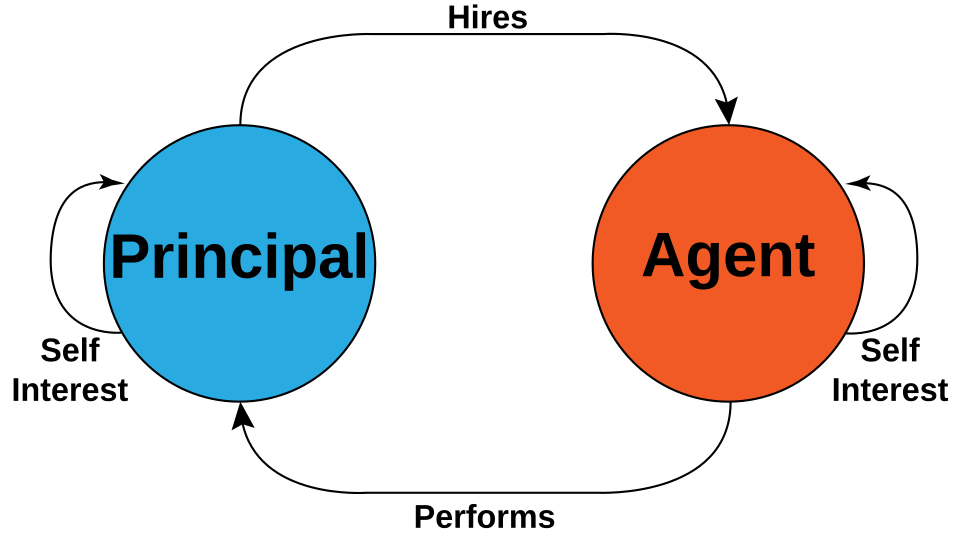
The intervention worked because it turned the principal-agent framework upside down. Instead of the traditional approach of just aligning employees to company goals, this intervention helped employees discover their own goals and assess whether their job served them.
I am not at all implying that the top-down component isn’t critical. The CEO’s core job is to architect the shared strategy and goals; those must be in place as a prerequisite. The beauty of something like the DYP is that it gives employees a boost, helping them rush to meet that shared purpose, each fueled by their own individual sense of meaning.
Personal purpose reflects a person’s unique mix of personality and beliefs shaped by life experience. It determines what a person enjoys doing and what makes them uncomfortable. (These are the things we encourage employees to share in their User Manuals.)
For example, someone who loves structure and dislikes chaos might choose “To bring clarity to complex problems so others can act with confidence.” Someone driven by fairness might choose “To fight injustice by giving voice to those who are ignored.”
Put both people in the same operations role at the same healthcare technology company.
The first can find meaning by developing robust systems and crafting actionable plans from unstructured discussions.
The second can draw meaning from how their efforts allow the company to expand access to underserved patient populations and reduce disparities in care quality.
Both personal purposes snap neatly onto the same company’s mission and vision.
The Bottom Line
Standard approaches to employee motivation fall into two categories: external incentives and corporate purpose campaigns. Neither really works.
External incentives don’t motivate sustainably. We’ve known for decades that pay-for-performance schemes have limited impact. Jim Collins addressed this years ago at a leadership summit. When asked about incentive programs, he said: “Incentive programs most often destroy companies and never create great companies. You cannot turn the wrong people into the right people with money.” His research for Good to Great found no correlation between incentive plans and outcomes. Daniel Pink’s work on motivation reinforced this, showing that once people earn enough to take money off the table, autonomy, mastery, and purpose drive performance far more than financial rewards.
Corporate purpose campaigns. These only work if employees can see themselves in the purpose. Too often they’re seen as cynical or halfhearted ploys by leadership, disconnected from the actual work employees do day to day. A lofty mission statement on the wall doesn’t help the individual contributor understand how their specific role creates meaning.
The Discover Your Purpose intervention took a different path. It asked: Does this person’s job serve their purpose? If yes, they stay engaged. If no, they leave, and everyone’s better off.
Most importantly, you need to recognize that a crisp mission and vision aren’t enough. Employees need to understand their own purpose too. Then they can decide whether your company’s purpose is one they can authentically serve.
Brilliant breakdown of how mission statements fall flat without personal purpose. The 51% reduction in underperformers is solid, but what really caught me was the exitdata showing people leaving faster when they realize misalignment. Saw smth similar at a previous company where forcing everyone through generic values training backfired. The Frankl-based approach flips this by letting people define their own meaning first.