
Thoughts on Whether an AI Agent Can Make You a Better CEO
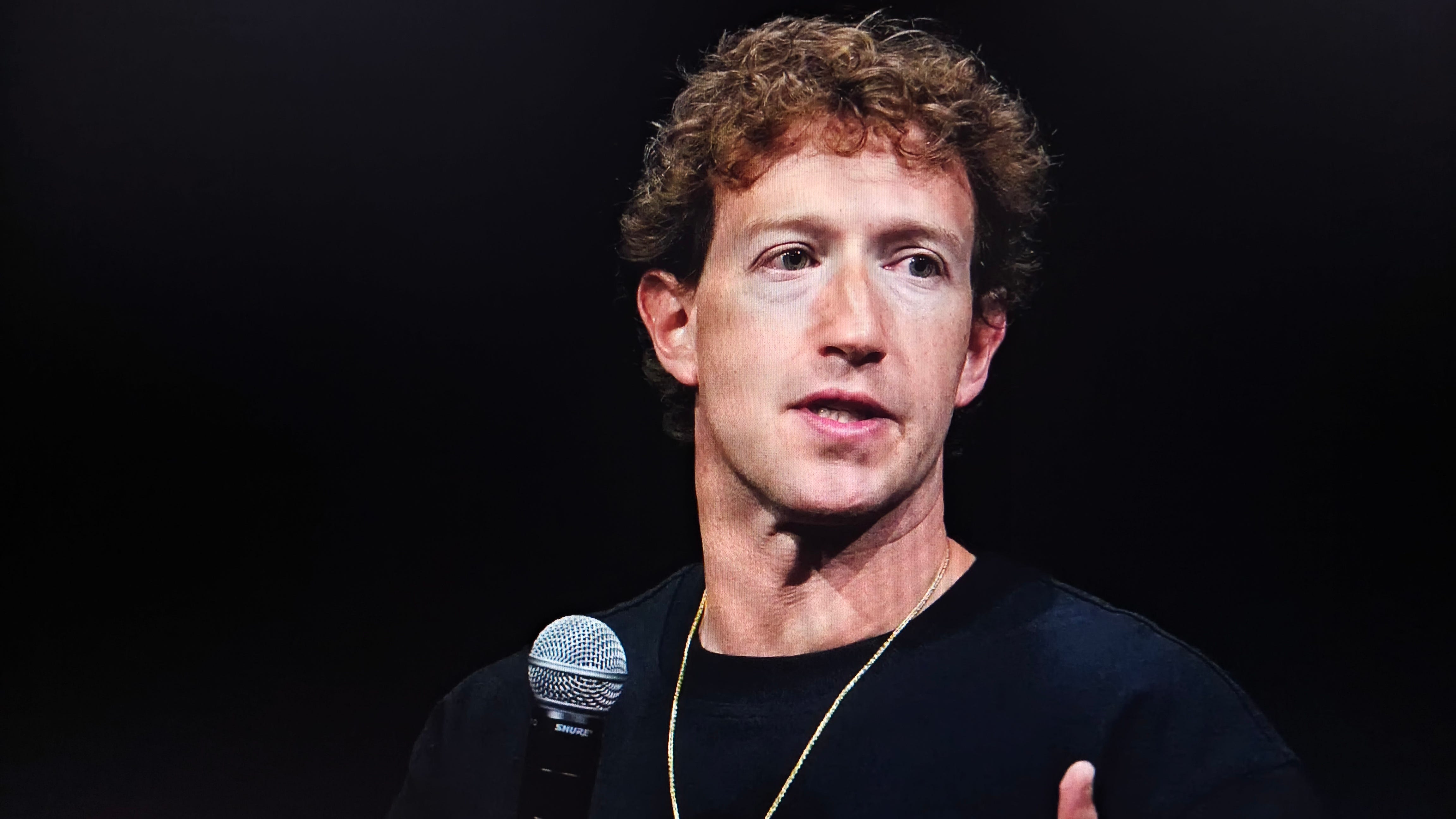
The WSJ published a story yesterday that details Mark Zuckerberg’s efforts to build an AI agent to be more effective as CEO.
The piece is light on details of what this agent does, other than surfacing information from inside his 78k-employee org. Most of the text describes broader efforts across Meta to get people using AI, including putting AI use as a category on their performance reviews.
If you know me, you know I think a lot about the job of the CEO. Lately it’s been impossible to not see AI as a major narrative thread in the story of how this role evolves.
A lot of CEOs and other execs aren’t using AI very much themselves though. They will issue mandates that their employees use it but then keep their own habits intact, or use AI in very cursory ways.
The narrative emerging is that CEOs proclaim AI to be the #1 concern for the future though most use it for less than an hour per week. Zuckerberg is going all in and starting with himself.
"In five years' time, everybody will have their own AI companion who knows them so intimately and so personally that they will come to live life alongside you."
This is Mustafa Suleyman, cofounder of DeepMind and CEO of Microsoft AI, and his wording here may sound creepy to some, but the kernel of insight is important. I agree that soon every knowledge worker will have an agent personalized to that individual’s job, work goals, industry, organization, working style, etc. It will make them effective in ways that are far beyond what a generic ChatGPT chat can do, even when ChatGPT “knows” you pretty well. This seems like what Zuckerberg is building for himself, and what I think any CEO should be doing too.
It’s been a priority for me as well for the past couple of years, and we are moving fast on building an agent tailored to the CEO job. (If you are a CEO and would like to be a free early user, please email me.)
Here are some thoughts that have been coming up as we work on this project.
1. CEOs can’t lead an AI revolution they aren’t personally taking part in.
Simple as that. An hour a week won’t cut it. CEOs who move quickly to integrate AI into how they operate personally are the ones who will come out ahead.
2. Your AI agent is only as good as its boundaries.
The feats of magic performed by LLMs in their early days were enabled by their access to oceanic histories of human output. Terrific for certain use cases, like research, some kinds of coding, writing plausibly human, middle-of-the-road text. But if you want real value from a CEO AI, for example, it can’t just scan its entire body of knowledge and give you an answer that splits the difference. Yet this is what generic LLMs do. Research increasingly shows a monoculture and shared answers across LLMs.
For a CEO agent to be effective, it needs training data that’s quite different from multipurpose AI. It needs to know how to be a good CEO, specifically, not summarize platitudes from everything ever written or said about the CEO job. And it needs even more specific context on you and the ideas and concepts and strategies that will give you an advantage over competitors.
What you put in is just as important as what you keep out.
3. CEO agents need a POV.
If a CEO agent won’t be trained on homogenized data, what will it be trained on? What instructions will it have?
In my view, a good CEO agent will in part function as a trainer, showing the user a specific set of tools that CEOs use to succeed. It’s like having a real trainer who’s been CEO for decades and has a differentiated perspective on how to do the CEO job.
I have built one such framework in the CEO Operating System, but I’m not saying all good CEO agents will follow that path. But they will need a clear, integrated, human-designed conception of the CEO job at their core.
4. AI is a natural fit for supporting operational discipline
While there are important frameworks that undergird the CEO job, a lot of what separates good CEOs from poor ones is simple discipline:
Getting the quarterly goals set
Reviewing those goals weekly
Having 1:1s with execs
Carving out weekly time for strategic thinking
Updating documents like your 1-Page Strategic Plan, org chart, role descriptions
on and on
A good CEO agent functions as a chief of staff too. It knows the rhythms your business operates on. It not only reminds you when it’s time for the next action but often gets you 70% of the way there (“Hey, it’s time to set goals for Q2. Based on how Q1 goals went, here are some suggestions…”).
And like a good chief of staff, a good CEO agent isn’t going to forget the details. Tell it to remember something and it will, and it will know the right moment to resurface it.
5. Your most valuable data is internal.
CEOs of large orgs sit atop a goldmine of insight: what people are working on, how their goals are going, what they heard from a customer, how they feel about their job, who’s providing the most value. In a small business, the CEO can usually walk around and pick this stuff up. In an enterprise or even midsize business, it’s tougher. I believe a good CEO agent will be invaluable in surfacing this information, especially when buried layers within the org. It’s the one concrete use of Zuckerberg’s developing CEO agent mentioned in the WSJ piece.
6. Your CEO agent won’t think for you.
Well, let me put that a different way. AI agents WILL think for you if you let them, but your own judgment, questions, doubts, disagreements with orthodoxy are all vitally important to your success as CEO. Your CEO agent can help you get the right inputs for thinking, but the CEO should be on guard against letting it overtake their own thought. Your cognitive powers should grow sharper thanks to your CEO agent, not fall off a cliff.
7. This is a competitive moat hiding in plain sight.
Most CEOs are waiting to see how AI shakes out before committing personally, but setting up and enriching a personalized agent now gives you a personal and institutional advantage. The operational discipline, informed decision making, clarity of approach will put you ahead and the gap will be hard for others to close later. Especially once EVERY manager in your org has their own agent too… but that is a topic for a future post.
AI is moving so fast that it’s really hard to picture where we’ll be even a year from here. But I find that a lot of that uncertainty (and even some anxiety) can be assuaged by jumping in now and committing to personally seeing how AI works for you, in deeper ways than spitting out LinkedIn posts or meeting agendas.
Again, if you’re a CEO and want to get in early on the agent we’re building, please reach out.
—Joel


A good AI setup should make your thinking better, not do the thinking for you.
Excellent, thought provoking article. I look forward to chatting more about this in our upcoming conversation.