



One of the most common but least examined assumptions about management is what I call the Santa and the Elves model.
In this model, the manager is Santa Claus. Like Santa, they’re equipped with elves—employees—whose job is to help the manager get their work done. At the North Pole, the elves exist purely to make Santa more productive. While they work cheerily in the toy factory, old St. Nick is off doing the fun stuff: reading letters, visiting children, eating cookies, delivering presents… and taking all the credit.
But for a manager, this is a deeply dysfunctional way to think about the role.
Your employees aren’t there to orbit around you while you handle the glamorous or strategic parts of the job. If you see them as instruments of your own productivity, you’ll never get the best from them.
Eventually, they’ll stop giving you their best altogether.
The better model for the manager-team relationship is that of a conductor leading an orchestra.
The conductor’s job seems mysterious to many people. After all, they don’t play a single note. But in a large, complex group of performers, the conductor is absolutely essential. They must envision how they want the music to sound, then bring dozens of individual contributors—strings, brass, woodwinds, percussion—into perfect sync to bring that vision to life.
Crucially, a great conductor doesn’t step in to play someone else’s part. Even if they could outplay the third-chair violinist, that’s not the job. Their role is to make the whole group excellent. That requires discipline, clarity, humility, and a deep respect for each contributor’s expertise.
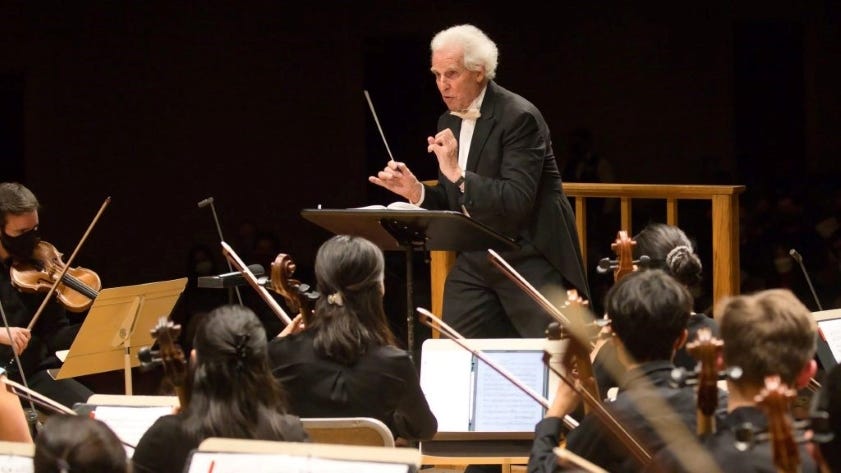
Benjamin Zander, the longtime conductor of the Boston Philharmonic, put it perfectly:
“The conductor of an orchestra doesn’t make a sound. He depends, for his power, on his ability to make other people powerful.”
That’s the job of a great manager, too. You may be talented. You may have deep expertise in your craft. But your power now comes from your ability to orchestrate. That includes setting the direction, coordinating effort, aligning individuals, and helping each person play their part to the fullest.
That means the manager can’t walk into a team meeting thinking, How can these employees help me? They must walk in asking, How can I help these employees do their best work, in sync with each other?
It’s a subtle shift. But it’s the difference between being the hero and being the leader.