


In 2009, CA Technologies acquired a company I built with my wife, Cathy, over 10 years.
We had always been proud of the people who helped steadily build the company through their consistent performance.
But after the sale to CA, something surprising occurred. The team we had so carefully assembled seemed to lose its magic. Engagement, as measured by the Gallup Q12, plummeted. The culture wasn’t at all the same. Predictably, people began to leave.
I realized then that our advantage hadn't just been our people—it had been that those people were properly managed. Our company took a proactive, structured approach to people management, and once that system was gone, replaced with the baggier, less consistent approach of a behemoth like CA, our team started to look pretty darn average.
What happened? I see now that, by failing to offer structured management practices, CA failed to capitalize on our most critical group of employees.
Broadly speaking, a company’s employees can be divided by performance into three groups:
Superstars (top 10%)
Middle Majority (middle 80%)
Stragglers (bottom 10%)
The top 10%, your Superstars, are typically self-motivated and autonomous. They will deliver results whether management is weak or strong. The bottom 10%, the Stragglers, are the problem people who won’t deliver results even with the best management. This leaves the central 80%, the Middle Majority, whose performance level is highly dependent on how well they are managed.
It is the Middle Majority where CEOs earn their keep. Engage them and optimize their productivity and you’ll have a powerhouse of a team. But saddle them with frustrating or absentee managers and they’ll quickly trend down, looking more like Stragglers. Once we sold our first company, it was that Middle Majority who were no longer supported. Thus the performance of the team looked very different.
This is why I believe so strongly in CEOs implementing a consistent management system that gives Middle Majority employees a chance to contribute their best. This looks like ensuring your managers have a clear process that includes items like:
Quarterly goal setting and goal alignment
Weekly 1-on-1s that incorporate goal review and development conversations
Weekly team meetings centered on predicting goal outcomes
Tools for understanding their personality type and how it meshes with their employees’ types
General understanding of people-management best practices
When every manager is trained in this system, the CEO ensures basic managerial competence across the board. That not only ensures the Middle Majority contributes their best—which is a huge part of the game—but also helps you retain the Superstars and prune the Stragglers.
I strongly suggest working with your HR head to establish some foundational management practices that drive productivity. I’d be happy to share more on that with CEOs who schedule an advisory session just below.
The Rundown
Amazon Goes Back to the Office
Amazon rolls back work-from-home policy amid other structural changes.
Amazon CEO Andy Jassy has declared a significant shift in workplace policy. In a recent letter to employees, Jassy stated that Amazon will discontinue its work-from-home arrangement, mandating full-time, in-office attendance. Employees failing to comply will face potential termination. This move aligns with a growing trend among technology firms that adopted flexible work setups during the COVID-19 pandemic but are now reverting to traditional office environments.
Starting January of next year, Amazon will join other major corporations such as Dell, Meta, IBM, Ubisoft, and Infosys, all of which have rolled back their remote and flexible work policies. Amazon's policy will accommodate exceptions solely for those with "extenuating circumstances."
In addition to the policy reversal, Jassy announced a strategic overhaul aimed at streamlining Amazon's corporate hierarchy. The plan includes a reduction in management roles and an increase in the ratio of individual contributors to managers by at least 15% by the end of Q1 2025. This restructuring is intended to enhance efficiency and agility within the company.
The broader industry trend suggests that many companies are reassessing the benefits and drawbacks of remote work. Factors influencing these decisions include challenges in maintaining company culture, collaboration difficulties, and concerns over productivity in dispersed work settings. For those interested in the detailed implications of this policy change and structural adjustment at Amazon, the full text of Jassy’s letter is available here.
Fed Pivot: First Cut in Four Years
The Federal Reserve cuts rates for the first time since 2020, ending the historic hiking cycle.
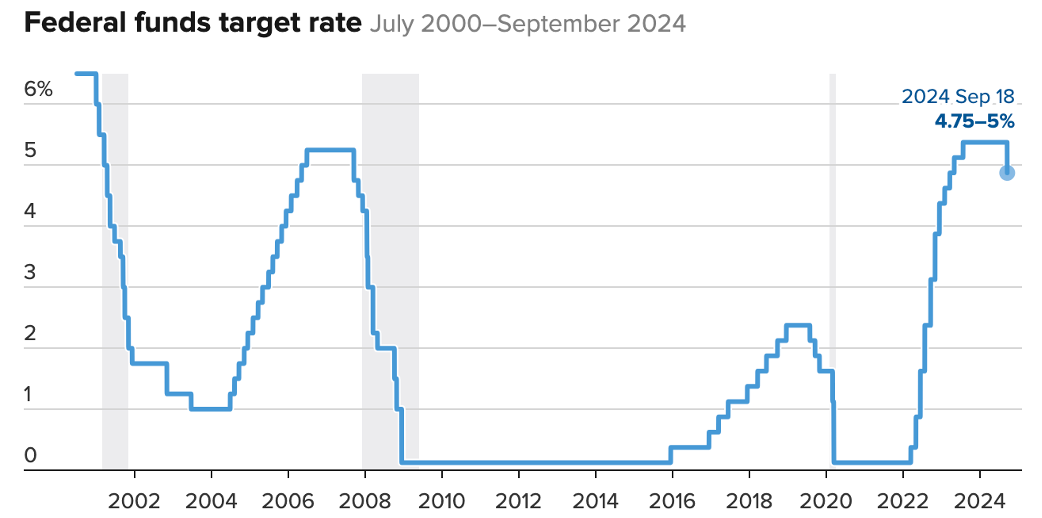
On Wednesday, the Federal Reserve implemented its first interest rate cut since March 2020, marking the end of one of the most aggressive rate-hiking cycles in its history. The federal funds rate now stands at 4.75%–5.00%, following a 50-basis-point cut. This move aligned with a shift in market expectations, which had anticipated a smaller reduction earlier in the week.
Outside of the emergency rate cuts during the COVID-19 pandemic, the last time the Fed made a cut of this magnitude was during the 2008 global financial crisis. The Federal Open Market Committee (FOMC) decision was nearly unanimous, with an 11-1 vote, marking the first dissent by a Fed governor since 2005.
This rate cut comes in the wake of similar moves by other major central banks, including the European Central Bank, the Bank of England, the Bank of Canada, and the People’s Bank of China, as global economies adjust to changing financial conditions and aim to stimulate growth.
Incoming Crash Report: Tupperware
Iconic food storage brand Tupperware seeks bankruptcy protection.
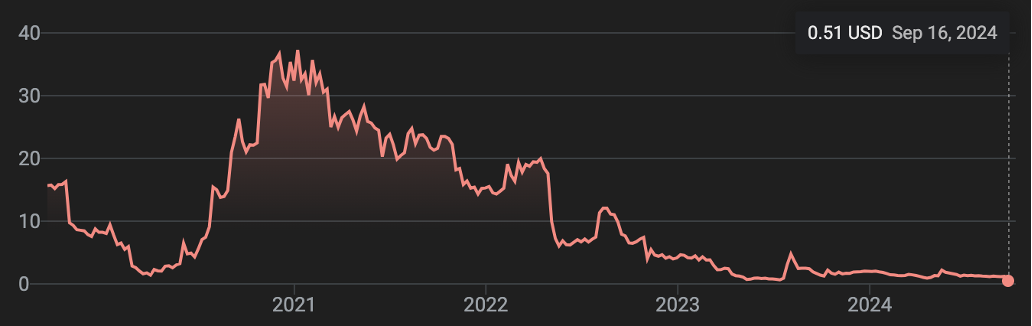
Tupperware, a longtime American classic brand, has filed for Chapter 11 bankruptcy protection as of this week. The company, which reported financial struggles in a regulatory filing last year, now reports over $1.2 billion in debt, compared to $679.5 million in assets. While Tupperware had received a $150 million reduction in its interest payment obligations and $21 million in new financing, macroeconomic trends, shifting consumer preferences, poor management decisions, and its aging direct-sales model have proven too strong of headwinds for the nearly 80-year-old business. Tupperware stock declined 74.5% this year and traded at 51 cents before it was delisted.
In our next edition, we will dive into what went wrong, how things could have been managed differently, and what the future holds for Tupperware.

“When you are inspired by some great purpose, some extraordinary project, all your thoughts break their bonds: Your mind transcends limitations, your consciousness expands in every direction, and you find yourself in a new, great and wonderful world. Dormant forces, faculties and talents become alive, and you discover yourself to be a greater person by far than you ever dreamed yourself to be.” ―Patanjali
“If you can see yourself objectively, you can take control of yourself and methodically build your own power.” —Gay Gaddis
“Treat people as if they were what they ought to be and you help them to become what they are capable of being.” ―Johann Wolfgang von Goethe