



“I have to do something!”
This is the feeling that often grips CEOs when the business is facing urgent problems, especially ones with no clear solution.
Say the economy takes a dive, or a product launch is failing. The CEO feels responsible for acting decisively. That’s part of the job. The pressure builds and builds. You have to stop standing there and act!
Welcome to what I call the “Do Something” Reflex. In these situations, doing anything feels better than doing nothing, even if you have no idea how to fix things.
Now, there’s nothing wrong with a bias for action. I am a big proponent of decision speed. But the “Do Something” Reflex presents real dangers for the CEO and the business.
How so? Well, when we act quickly, we tend to become wedded to our initial move, despite not knowing what the hell we were doing in the first place.
You can see this play out in every realm of high-level leadership, whether it’s the boardroom of a Fortune 500 or the Oval Office. The leader makes a big decision during a crisis… but then stops assessing and reassessing that choice.
The decision made out of urgency becomes sacred. Instead of acknowledging that the initial choice was just a best guess, they cling to it. They defend it. They stop asking the crucial question: What else might work better?
Getting Wedded to the First Move
We saw a vivid illustration of this during the COVID-19 pandemic. In the early days, public-health leaders scrambled to recommend protective measures. Some of these—like mask-wearing and social distancing—were reasonable first attempts. The issue wasn’t in the initial recommendation. It was in the failure to treat these moves as provisional.
Rather than clearly saying, “Hey, we’re not sure if this will help, but we think it might,” leaders portrayed these decisions as certain. And when emerging data questioned their efficacy, instead of reassessing, we doubled down. Credibility suffered. People tuned out. And you could argue that, amid other missteps, public-health institutions lost the trust of a good portion of Americans.
A similar phenomenon happens in business all the time. A CEO implements a hiring freeze in response to macroeconomic trends, and the business loses its ability to properly serve customers. But the hiring freeze stays, because it was an important and necessary move! I, the CEO, had to do something! Wouldn’t I look weak if I reversed it?
Doing something is often better than paralysis. But only if you’re ready to switch things up if it’s not working.
Prepare to Be Wrong
The faster you decide, the more prepared you must be to be wrong. And most leaders aren’t prepared to be wrong.
Good leadership doesn’t mean always being right. It means being honest about what you don’t know, taking action anyway, and being flexible enough to pivot when reality doesn’t match your assumptions.
Behavioral economists call our reluctance to change course the “escalation of commitment.” It’s the tendency to continue investing in a decision despite evidence it’s failing, simply because you’ve already invested in it. It happens to individuals like the CEO, and it can happen in groups, like your whole executive team. It’s a very human bias. It’s easier to let inertia carry us forward, and to avoid looking like we made a mistake. But escalation of commitment can be fatal in the CEO seat unless you fight it consciously.
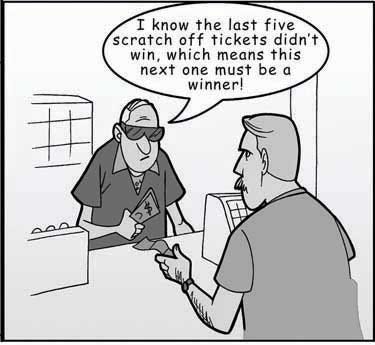
How to Avoid the “Do Something” Trap
Position early decisions as hypotheses. Say: “We’re trying this approach, and we’ll evaluate in two weeks.” This primes the team for future adjustments and can reduce your own resistance to them.
Set clear check-ins. Track the outcomes of the decision, without becoming wedded to any finding. Don’t try to prove it’s working. As best you can, evaluate the measures you took objectively. Try asking someone to play devil’s advocate to make sure you’re seeing all sides of the issue.
Decouple ego from action. The goal isn’t to be “right”—it’s to be effective. You will retain much more credibility as a leader if you pivot when necessary, even if it means reversing an earlier decision, than if you dig your heels in on something that everyone can see isn’t working.
Leadership is about navigating uncertainty, not erasing it. The best leaders do something—but they also stay alert enough to undo it when new information emerges.
You must hold two ideas at once: I am responsible for making a decision—and I am willing to abandon it if it’s wrong.
That’s not weakness. That’s wisdom.
This was outstanding, Joel. I saw this gold sparkling in the stream: "The faster you decide, the more prepared you must be to be wrong. And most leaders aren’t prepared to be wrong." There's an emotional, psychological, status block to learning, adjusting and moving forward better. This too: "... being flexible enough to pivot when reality doesn’t match your assumptions."
"You will retain much more credibility as a leader if you pivot when necessary, even if it means reversing an earlier decision, than if you dig your heels in on something that everyone can see isn’t working." You should be charging boards for this type of advisory.
I appreciate the tactic of decoupling ego from action, that is, overcoming our ego reactions to allow information and logic to drive our response rather than insecurity or emotion.