


Are you a CEO who is ready to graduate AI 101? Put AI’s full power to use with ChatCEO. Your private instance that knows the CEO job. Sign up here.
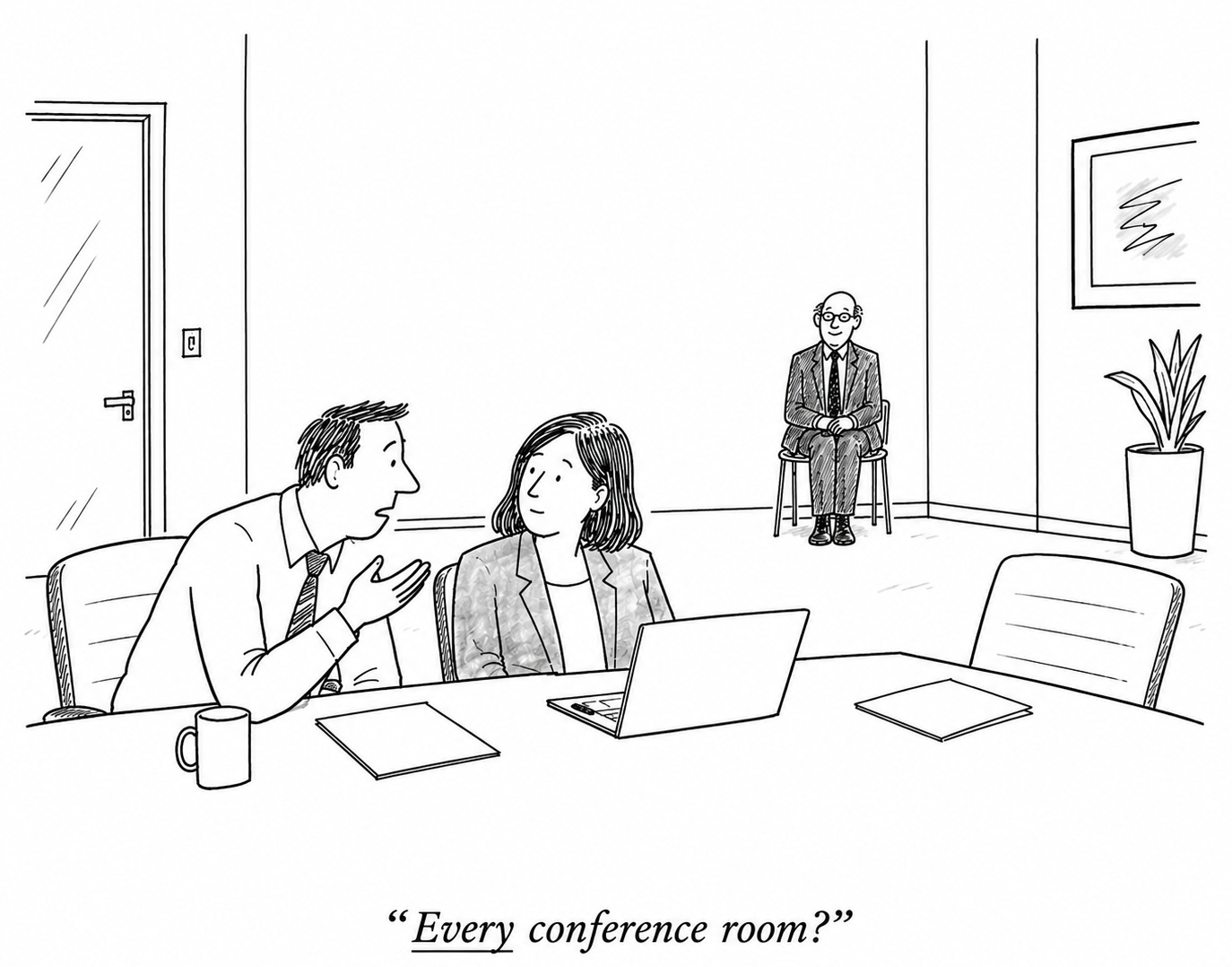
All CEOs encounter a basic problem as the company scales: they can’t be in every room.
When a company is small, the CEO can make or directly shape most of the important calls: which customers to pursue, which features to build, which people to hire, where to spend, what to prioritize. At 500 people, those decisions are being made all day, every day, throughout the organization, often by people several layers removed from the CEO.
Leaders have always had to solve some version of this problem, whether they were running GE or commanding a Prussian army.
In the nineteenth century, Helmuth von Moltke helped institutionalize the Prussian concept that became known as Auftragstaktik. A commander made the objective and his intent clear, then relied on subordinates to use their judgment as conditions changed. The Prussian army spent a lot of time building that mechanism with doctrine and training designed to help officers understand the larger purpose and act without waiting for instructions.
A good CEO needs the same capability. So they can, in effect, be in every room.
Early last year, before I was thinking as deeply as I am now about AI and the CEO, I wrote about the idea of “multiplying yourself” as chief executive. My point was that a good management system turns managers into extensions of CEO intent. Which is still true.
What’s different now? Today, AI can supercharge the CEO’s influence inside the organization.
A Better Enterprise Use for AI
Many CEOs still use AI as a fancy search engine. My mission today is helping them find the highest-leverage uses (see: ChatCEO). One of those uses is extending intent throughout the organization.
Imagine giving every employee access to an AI that understands how the CEO wants the company to operate. It knows the long-term mission and vision. It knows the values that differentiate the organization and how those values guide tradeoffs. It knows the measurable strategic objectives. It understands how the CEO thinks about creating value for customers, employees and shareholders, including how to balance those interests when they come into tension.
All of that can live in an LLM that employees consult when they face a decision.
It’s a 24/7 version of commander’s intent, available across the company. It can work in endless ways, but here are a couple of examples:
Picture a salesperson several time zones from headquarters negotiating with an important prospect. The prospect asks for a discount. The company’s AI knows that protecting margin is a current strategic priority, that the company competes on service rather than price, and that the CEO and sales leader have established a specific discount range that salespeople can approve themselves. The rep can use that context as a sanity check, then decide how to handle the customer.
Or consider a software team several layers below the executive team deciding whether to interrupt its roadmap to fix a quality issue affecting a subset of customers. The AI can surface that reducing enterprise churn is a strategic objective and that reliability is one of the company’s differentiating values. The team still brings the facts the AI cannot see: the severity of the bug, the technical risk and what customers are telling them.

Thinking Partner vs. Oracle
The AI should be a thinking partner, not an oracle. Employees closest to a situation will usually have information that the CEO and the AI do not. Their judgment about the customer, people, technical constraints and immediate circumstances remains essential.
The AI contributes organizational context. Does this choice advance a strategic objective? Is it consistent with our values? Does it help one stakeholder at an unacceptable cost to another?
Also, to be clear, the CEO must still communicate abundantly and constantly.
Commander’s intent only works when the intent is clear, and the same is true here. The CEO has to keep explaining the mission, priorities, objectives and tradeoffs. AI can reinforce that communication, distribute it farther and make it available at the moment an employee needs it.
This complements the management system rather than replacing it. Managers still translate strategy, coach employees and exercise judgment. Employees still respond to the facts in front of them. AI gives both groups a better way to stay grounded in the principles and priorities of the organization when the CEO cannot be in the room.
The most valuable output of an intent-aware AI may be the moments when an employee consciously overrides it. Those divergences show exactly where the CEO's intent is unclear, outdated, or wrong. That turns the AI from a broadcast channel into a sensor, and makes intent a living system rather than a memo. Are you seeing CEOs close that feedback loop yet?