


The most common CEO fear is being found to be incompetent.
From one in-depth survey of 116 executives reported in Harvard Business Review:
What I found about executives’ fears and their impact in the boardroom was revealing, and in some cases astonishing . . . The biggest fear is being found to be incompetent, also known as the “imposter syndrome.” This fear diminishes their confidence and undermines relationships with other executives.
A new report from Korn Ferry agrees, finding that 71% of US CEOs say they’ve felt imposter syndrome, where we feel the façade will be ripped away at any moment, exposing us as a fraud. (I would guess the number is even higher than that.) What’s really interesting is that in the same study only 47% of the regular workforce reports feeling imposter syndrome.
Strange. Don’t CEOs land their spots because of their confidence and competence?
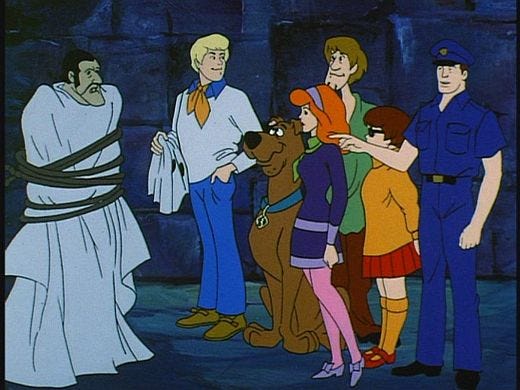
When you’re the CEO—when your job performance is scrutinized to the last detail by employees, customers, analysts, and the general public—the fear of incompetence can become overwhelming.
One of my favorite studies on this topic was done by River Group several years ago. It found that new CEOs rated their preparedness for the role at 7.2 out of 10 on their first day. However, six months into the position, this self-assessed preparedness dropped to 3.5! Turns out, the CEO job can make even seasoned professionals think twice about their competence.
As someone who’s deeply interested in the role of the CEO, I often talk to people about their jobs, and I usually ask specifically about their view of the CEO. Very rarely does anyone tell me that the CEO is incompetent. Employees would have to have a clear understanding of the CEO’s job to make that determination, and most don’t.
That doesn’t mean CEOs should shrug off their fear of being exposed as incompetent. Competence is crucial to being effective as a chief executive, and people do sense whether you have it, even when they can't exactly define it. And displaying basic levels of competence is one of the three keys of leadership. You may not totally eradicate the deep-seated fear that you aren’t up to the role, but the more you actively build your competence, the less paralyzed you’ll feel.
The CEO relies on two types of competence, one of which is more essential and harder to build than the other:
Functional competence
This is the kind of expertise that helps CEOs get their leadership role in the first place—the particular skills or knowledge that helped you prove yourself, whether it was closing deals, raising money, or recruiting superstar employees. By the time you land in the executive suite, you probably feel pretty confident in your functional-level competence.
CEO-specific competence
This the harder-to-build variety. This is the kind of competence most chief executives fear they lack, the kind that's usually built under a very bright spotlight. How does a person figure out how to be a good CEO anyway? The corner office doesn’t come with a handbook. There aren’t libraries of tactical advice written just for CEOs. And every company is different, of course, requiring adaptability and shifting sets of skills.
Fortunately, you can take steps to proactively build your CEO-specific competence. Here are three ways:
1. Make time to read.
I wrote The CEO Tightrope and The Chief Executive Operating System (and this Substack) because I saw a gap in the market for books specifically about how to build competence as a CEO. In it, I explain the five responsibilities every chief executive must fulfill. But there are, of course, plenty of business and leadership books that contain brilliant insight for CEOs, and the biographies of famous business leaders can be similarly instructive. You probably don’t have a ton of spare reading time, but the value of picking up wisdom from the words of others is hard to overstate.
2. Talk to fellow CEOs.
The best people to talk to about CEO competence are your peers. Reach out to CEOs you know and ask them about their companies, their struggles, and their successes.
3. Coaching and networking groups.
Programs like those offered by Vistage are a fantastic way to formalize peer learning and get access to people you wouldn’t otherwise meet. Similarly, working with an executive coach can do for CEOs what a good trainer does for the health-seeker.
It should comfort many CEOs to know they aren’t alone in their fear of being unmasked as incompetent. Just as encouraging is the fact that any CEO, with some focus and determination, can tangibly increase his or her competence.
That's really interesting—I wouldn't have guessed that statistic was that high. It makes sense though because as a CEO, you have to wear a lot of hats, and that can be overwhelming.
We’re often bombarded with CEOs who seem to have massive egos like Musk, Bezos and Zuckerberg, but there are tons of others running much smaller companies, yet still have a lot of responsibility.
And I had to read this with the Scooby-Doo picture being a massive fan of that cartoon throughout my entire childhood!
Happy Friday, Joel!
Operating as a CEO is a big, wide and deep job. I like how you break down the different required competences: technical expertise and CEO-specific competence. You know better than me, there is a distinct difference. They are two different things.
That CEOs can come to feel ill-prepared for the role 6 months in shows how challenging it can be even for the best. It takes time to grow into the role and CEOs would benefit from a system and coaching.
I laughed at the Scooby Doo reference. That took me back. I'm so old.