


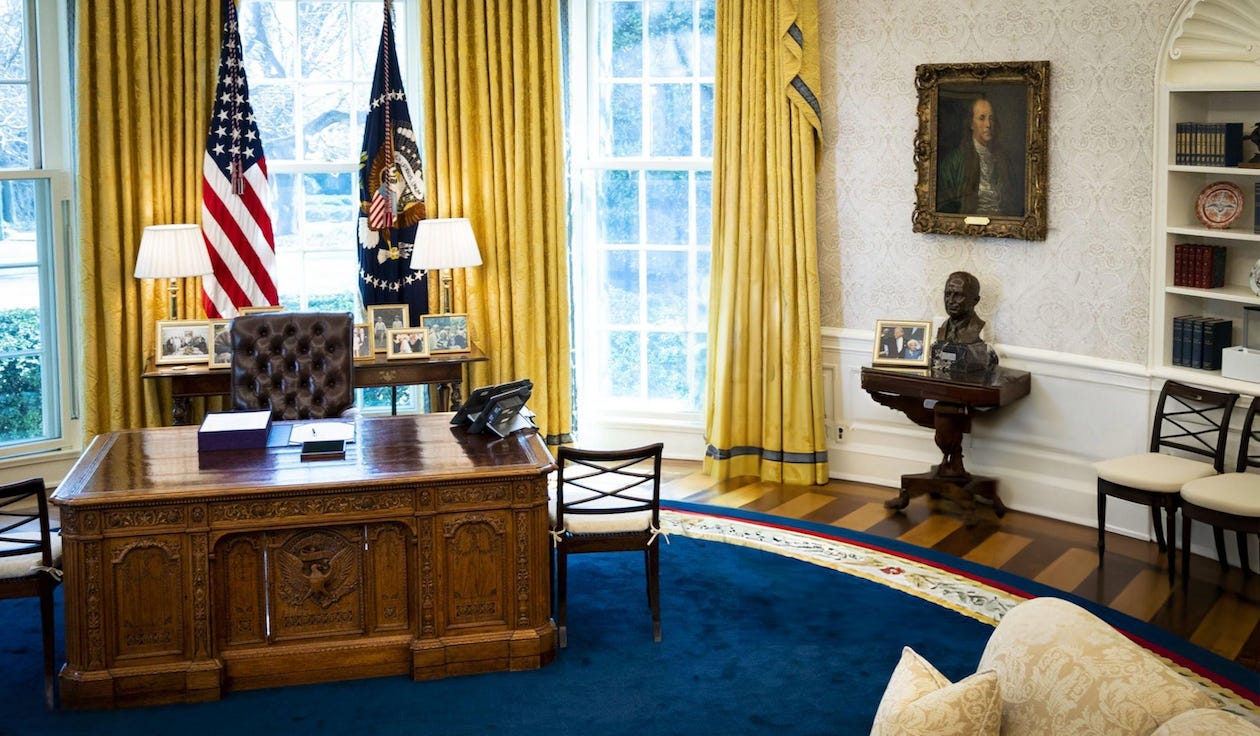
CEOs can learn a lot about leadership from US presidents. Some of that learning comes by negative example, but there are plenty of presidents who left us with positive lessons too.
On this Presidents Day, here are three presidential principles I incorporate into my training for CEOs.
Eisenhower: Influence Over Control
“Leadership is the art of getting someone else to do something you want done because he wants to do it.” —Dwight D. Eisenhower
I use Eisenhower’s quote as my standard definition of leadership. The brilliance of it is that it acknowledges the integral role of influence and persuasion in leadership. No CEO gets people to act by issuing orders. You have to explain the why behind your vision, to show people how they will benefit personally if the vision is achieved, to make them WANT to achieve it with you.
Eisenhower famously convinced a group of young soldiers to storm a beach while knowing that many of them would not return. If he could do that, your challenge pales by comparison.
How do you build this influence Eisenhower speaks of? My formula is pretty simple. To grow leadership influence, people must believe you have 3 Cs:
Credibility: When you speak, do people believe you are telling the full truth?
Competence: Do people believe you have mastered your domain of business, understand the company you lead, and make good judgments?
Caring: Do people believe that you put the interests of the team ahead of your own personal interests?
Reagan: Accountability without Micromanagement
“Trust, but verify.” —Ronald Reagan
Reagan used this phrase to describe his philosophy on overseeing U.S.-Soviet arms control agreements. But it applies perfectly to how CEOs must handle accountability with their teams.
Everyone has had a “micromanager” who breathed down their neck and didn’t trust them to send a simple email. Because they dread being called a micromanager, lots of leaders swing too far in the other direction, becoming absentee leaders who don’t verify anything in the name of trusting employees.
Reagan’s three words provide a maxim to guide the balance. Trusting people is critical, but you also have to offer support and ensure with your own eyes that the right things are happening in the organization. Good goal-setting with a weekly predictive feedback loop is my chosen way to master the balance. Checking in without checking up is a good way to apply Reagan’s saying.
Truman: Full Responsibility
“The buck stops here.” —Harry S Truman
Beyond Eisenhower and Reagan, Truman is one of the modern presidents I think was among the best. He had to make agonizing decisions, including whether to drop the atomic bomb. (Don’t you love how presidential leadership makes our jobs seem easier?) His famous desk sign about the buck stopping with him is something every CEO should live out, even though it’s one of the toughest parts of the job.
CEOs have full responsibility for the organization but they lack full control. When things go wrong, you have to absorb that responsibility, even if emotionally you feel like it was someone else’s fault. CEOs rarely look weaker than when they try to excuse the company’s failures by passing the buck to someone else, whether it’s their team, the market, circumstances, competitors, etc.
Even subtle attempts to minimize your responsibility will show up in bright lights to your employees. Over time, if you do pass the buck, it leads to a company culture of excuse making and poor accountability.
Do you have any favorite leadership lessons from the Oval Office? Share them in the comments if so.