


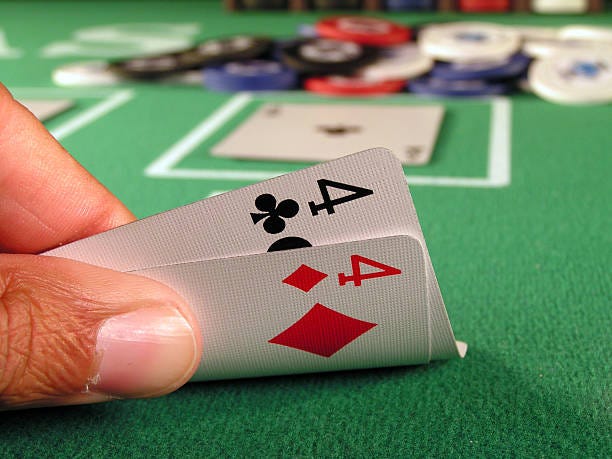
Years ago, I was playing in a poker game one night at my brother’s house. It was the standard low-stakes game played among a group of friends. Most of the people had never played a lot of serious poker, so they didn’t know how complex the game can be.
I first started going out to Las Vegas to play poker in 1993 and for many years played every chance I got. While I may not be ready for the world championship, I have studied the game enough to be a solid player in most games.
At my brother’s game that night, there was a hand where I had folded early but I kept watching as the betting proceeded along. About midway through the hand, my brother grimaced. I could tell he wanted to call the bet but knew the correct strategy was to fold. I quickly reviewed the past bets in my mind and blurted out, “A pair of fours, eh?” He showed me the cards he had thrown away, which were indeed a pair of fours.
Most people were surprised I had figured out his hand correctly just from watching the betting. I explained that I didn’t really KNOW he had a pair of fours, but I was able to work out that he likely had a small pair that did not match any of the cards on the board. It could have been a pair of fives, but I had it narrowed down pretty closely. I then got a little lucky by guessing the fours.
The problem for most of the players at the table wasn’t that they couldn’t understand how I deduced his hand—it was that they rarely gave sustained or systematic thought to what another player was holding. For the most part, they were focused on their own hand and what card they needed to make it better.
I often see the same phenomenon in business. People are so self-centered, so intent on their own wants and needs, that they don’t consider the wants and needs of the other party in the transaction. It is amazing the insight you can get by viewing the situation from a different angle.
There are many ways this plays out in the CEO’s work. Here are just a few ways to stop and consider the other party’s hand:
What are my competitors up to? Reorient your outlook and picture the world from your competitor’s vantage point. What advantages do they have right now? What weaknesses of your company might they exploit? What changes in the market could be exciting for them? What does all this mean for you?
What are my employees thinking? Thinking like an employee forces you to imagine how they see you as a leader and whether they are inspired by the goals you set for the company. What’s in it for your frontline staff? Have you ensured they know how they contribute and how the company is making a difference in the world?
What do our customers want? It’s exceedingly easy for companies to fall into the trap of supplying products and services THEY want to supply—not the ones customers actually want. Again, put yourself in the headspace of your target consumer. What are they frustrated by? What do they need? What do they need but haven’t even realized they need? What would compel them to do business with you over other options?
How would my board and shareholders feel about this? Your continued employment hinges on understanding how these stakeholders see the world. When making decisions and setting goals, spend a moment taking on their view. If you were merely an investor in the company, what would reassure you about its future? If you were a board member, what actions by the CEO would encourage you?
In my work with CEOs, one theme is repeated over and over: Make time to stop and think. One of the most fruitful modes of such thinking is considering the hand the other person holds.
What cards do they have? How will that influence their next actions? You may not make as lucky a guess as I did about the pair of fours—but you can narrow it down considerably.
Strategy is so important. But I think you really hit a huge point here – understanding your customers or the people you’re working with is key. The more you can understand their needs, the better you’ll be able to provide the right support to help them and know how to proceed.