


As noted by The Kobeissi Letter this week:
US multifamily housing unit completions hit 647,000 at an annual rate in Q3 2024, the fastest pace in 3 decades. Since 2022, additions of housing units in buildings with 5+ units have more than DOUBLED.

Clearly, builders have turned decisively toward multifamily projects. It’s easier to create more units quickly that way, and land isn’t as much of an issue. Thanks to this multifamily housing bonanza, we can expect US residential rental rates to continue coming down—and for lots of Americans to look more favorably on renting than home ownership.
What does this mean for the US workforce? One clear effect: With less pressure on their paycheck from rent, employees may be able to better cope with inflation in other areas. Though wage growth has kept pace with inflation this year, working Americans could feel less of a crunch.
The other thing CEOs should consider is the mobility of the workforce. A supremely talented employee who rents might be far more willing to come work for you in another state than a similar employee who owns a home. CEOs should keep up their eternal search for the absolute best people to come work for them—and consider that a relo may be less of a burden than it once would’ve been.
Is the Stock Market Headed for a Big Correction?
That’s one way to read the fact that CAPE—Cyclically Adjusted Price-to-Earnings Ratio—is back above 38 for only the third time in history, as noted by Charlie Bilello.
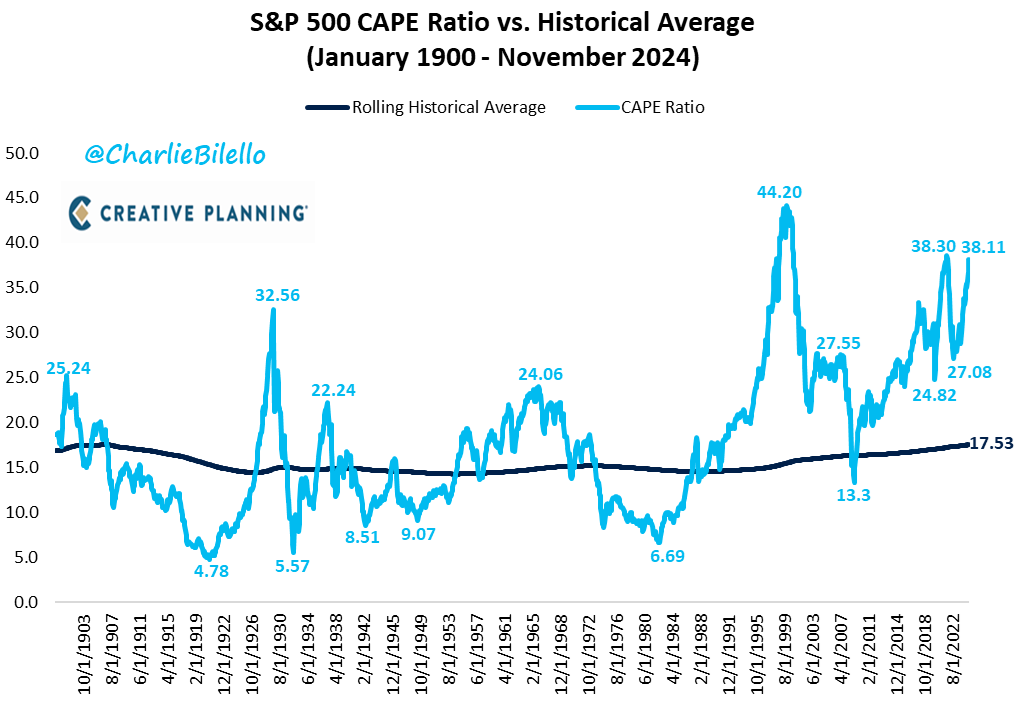
CAPE is essentially P/E ratio with inflation and short-term noise smoothed out. With the ratio currently looking this overheated, many are wondering if the S&P can possibly continue to deliver the results it has over the past five years. Bearish signs from Warren Buffett’s camp have drawn further speculation about a coming plummet.
While I do find it hard to believe that the stock market can keep up the trajectory it’s been on, CAPE should be read as one metric with potential weaknesses rather than a clear omen. CAPE embeds a lot of historical information on inflation, but changes in how the government calculates inflation can skew the metric itself.
Being a backward-looking measure with certain weaknesses, the historically high CAPE ratio doesn’t necessarily mean we won’t see the stock market continue to trend upward—even if the trend does slow.
The Bloating of American Education
Every American has a stake in how effectively and efficiently we educate our young people. That includes the business sector—and right now we’re heaping taxpayer funds on public schools with very little to show for it in terms of a more knowledgeable and skilled workforce.
President-Elect Trump has said he plans to end the Department of Education, which could stunt the incredible growth of non-teacher roles in public schools:
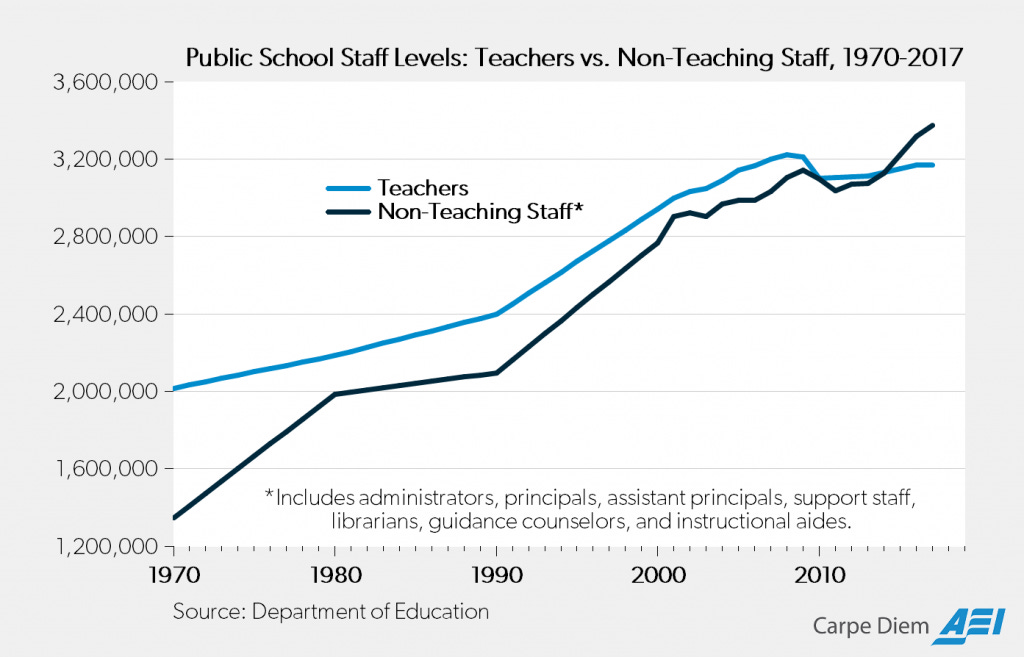
This chart only goes to 2017, and it’s only gotten worse from there. The Department of Education does not itself employ teachers. Rather, it sends funds to the states—and the funds are packaged with stipulations and reporting requirements that necessitate many of these non-teaching staff. Ending the Department of Education could conceivably save not only federal money but state-level money too by doing away with many of these administrative roles.
But this outcome is—like any campaign promise—not something I would count on.