


Every person doing meaningful work needs to understand three things: what to do, why it needs to be done, and how to do it.
Most leadership development focuses on the “how” question. And for good reason: for most leaders, including executives, the “what” of the job is relatively clear. A sales VP knows the objective is to close more deals. A CFO knows the goal is to strengthen the balance sheet. A head of product knows she needs to ship features customers will pay for.
The hard part of these jobs is figuring out how to get there. How do we improve our close rate? How do we reduce our cash burn? How do we prioritize the roadmap?
The CEO Job Is Figuring Out What to Do
But the CEO role is fundamentally different, and most people don’t realize it until they’re sitting in the chair. When you become a CEO, the “how” problems are still there, but you’ve got a bigger fish to fry first: “what” to do in the first place.
This might seem like an absurd thing to say, since CEOs have infinite things to do. Just look at the typical CEO calendar or inbox. There’s a smorgasbord of tasks that appear to have a legitimate claim on the CEO’s time.
But that is exactly the problem. Within all that noise, it’s difficult to decide in that moment what the best thing to do is.
There’s no boss to sit down and prioritize with. It all feels really urgent. Half of it is regarding stuff you aren’t an expert in. The question nags: Of all the things I could do today, which one will have the greatest impact on this company’s future?
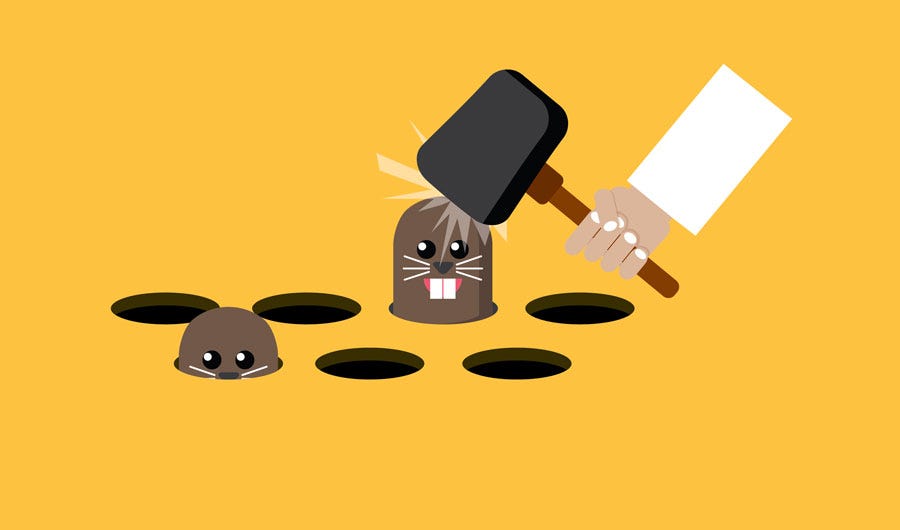
Grappling with that question is not particularly fun. I know because I’ve been there. You’re the CEO, so you could technically do anything. No one is looking over your shoulder. The easy temptation is to jump on whatever fire seems to be burning brightest at the moment.
In most cases, the CEO who operates this way is doing the work of people two or three levels below them, leaving the true “CEO work” undone. They act as the “Super VP,” pinch-hitting in situations where the responsible executive would likely have handled the issue just fine on their own.
OK, So What Is the CEO’s WHAT?
I’m sure you’re ready for me to reveal the “what” I think CEOs should be working on. I’ve written two books on that topic, but I do have a few organizing principles that I think help CEOs understand where their time is best spent.
Before deciding what to do, the CEO should ask:
Does it further one of the five CEO responsibilities?
These five responsibilities, pertaining to vision, resources, culture, decisions, and performance, are the heart of the CEO job. If it’s not furthering one of these, it shouldn’t be on your plate.
Is it future-focused?
A good CEO is a helmsman or helmswoman, always looking out to the horizon. If what you’re doing has you facing backward and rowing, it’s not CEO work. Effective CEOs think about where the business needs to be in one, two, or three years and beyond. They predict where things are going and consider what that means for existing strategy.
Does it balance the organization?
The CEO sits above the six core areas of the business and manages the tension between them. If the CEO’s work is intensely focused on one or two of those areas, they aren’t meeting the obligation to balance the business as a whole.
None of the above items, in isolation, would seem shocking to a CEO. The problem is that most CEOs operate without a mental model of “what” should be taking up their time. Without that organizing principle to return to, their most critical duties tend to slip into the background.
Getting the “what” right requires stepping back, seeing the whole system, and making judgment calls with incomplete information. It requires resisting the gravitational pull of the urgent in favor of the important.
The best CEOs I’ve worked with have developed a discipline around identifying the “what” with the same rigor that other leaders apply to the “how.” They build in protected time to ask: What is the best use of my time today?
They sit with that question, too. They don’t accept the easy answer or jump reactively on the first email in their inbox.
If you’re a CEO and you feel perpetually behind and never quite sure if you’re working on the right thing, you may have a “what” problem.
Need some support in this? We can help. If you lead a company of more than 50 employees, we invite you to become part of the Founding 50 of ChatCEO. You’ll get free access to our new CEO platform for one year. ChatCEO is trained on 30+ years of real-world CEO experience and helps you figure out what your best use of time is, every single day.
