



Most people draw a clear line between for-profit employees and nonprofit volunteers. Money changes everything, right?
Yet, after many years working with organizations on both sides of that fence, it’s clear to me that managing people in each setting is much more similar than anyone wants to admit. Whether you issue a paycheck or a thank-you note and some swag, the real job of a leader is surprisingly consistent.
The Illusion of Retention: Everyone Can Walk
Perhaps the most striking similarity between managing employees in a for-profit business and volunteers in a nonprofit organization is the need for sustained motivation.
Think paying someone to work for you guarantees that motivation? Not so.
Both employees and volunteers show up because they choose to. That choice can be revoked at any time, regardless of whether it’s due to a better offer, burnout, or just a change in weather. (Of course, that is as it should be.)
The most common reason a for-profit loses an employee is some form of disengagement, which is inching back up, by the way. It’s rarely about pay. Meanwhile, nonprofits routinely lose volunteers for similar reasons, often because the mission or culture has failed to connect. A paycheck may keep your paid employee logging in most mornings, but it doesn’t keep the fire burning.
“Accept the fact that we have to treat almost anybody as a volunteer.”
—Peter Drucker
If it’s not pay that keeps the salaried employee at your company, they must be treated in a sense as volunteers. This means leaders in business must work just as hard as nonprofit leaders to earn their team’s commitment. Issuing checks is not enough.
What precisely earns that commitment will be different for each person, but it predictably comes from higher-order motivators like:
the opportunity to grow and develop
a sense of achievement
increasing responsibility and ownership
For more, see Herzberg’s two-factor theory, to which I wholeheartedly subscribe.
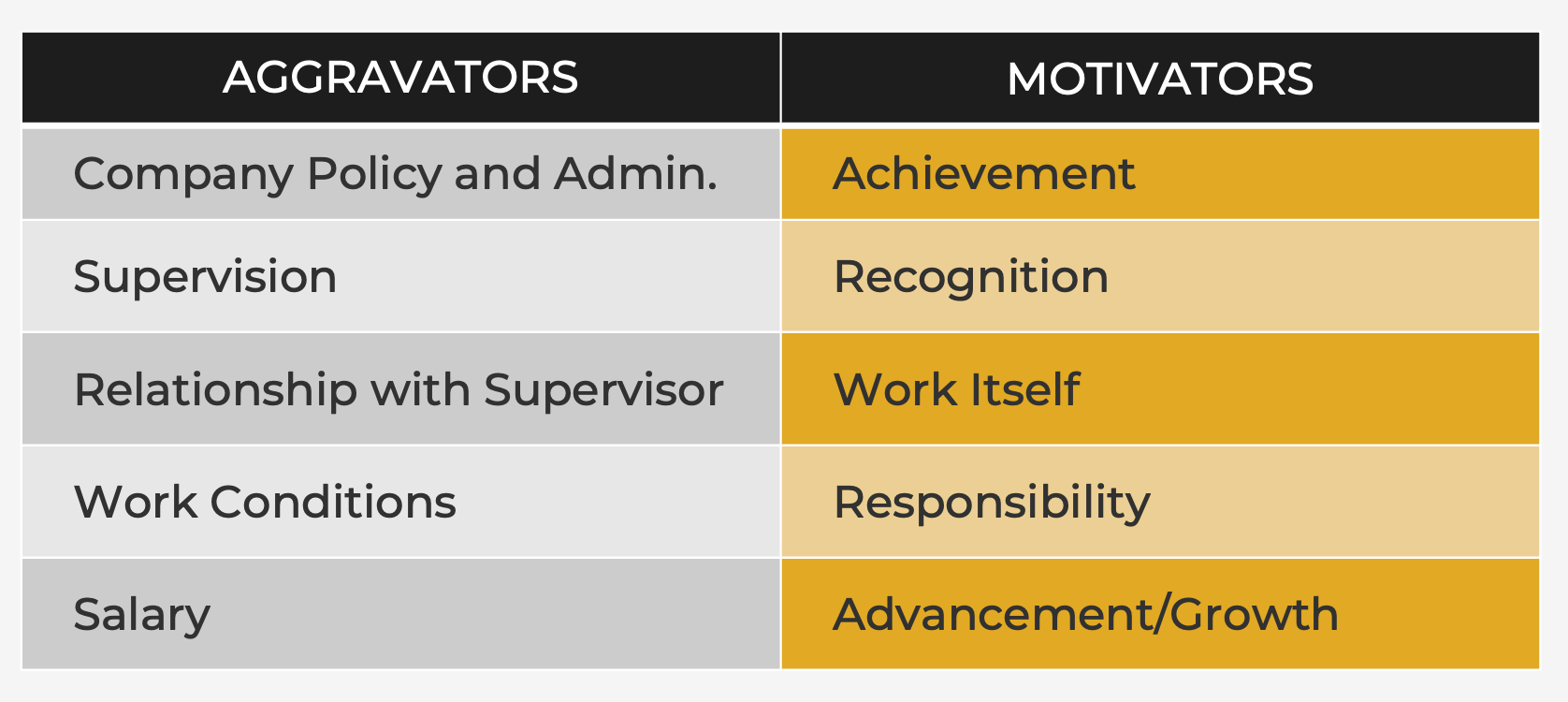
Decades of research has shown that non-financial recognition is often a more powerful motivator than cash incentives for both employees and volunteers. People crave purpose and progress. In the corporate world, you can see the difference between employees who care and those just collecting a check. The error many companies make is twofold:
They don’t realize that the check-cashers are, in most cases, doing work of notably reduced quality and creativity than the actually engaged employees.
They overestimate the degree to which a paycheck is a hedge against losing people.

I’ll say it again: your paid employees are, within the context of the job market, not all that different from volunteers. Companies that take the position, stated or implied, that employees should be grateful they even have a job are going to lose out. Nonprofits can’t afford to do that, and businesses can’t either. We have to give them a galvanizing mission, fuel their commitment, and show them how they contribute.
Accountability Isn’t Optional
Here’s another myth worth dispelling: Nonprofits can’t “fire” their people because volunteers are giving their time for free.
The reality is, both types of organization must be prepared to let people go, even if it’s a volunteer. In a for-profit business, holding team members to account is seen as basic good practice. The best nonprofits operate with the same clarity of standards.
Whether someone is paid or unpaid, accountability is a form of respect. It signals that everyone’s contribution has real impact. Leaders must set clear expectations and have the backbone to address what happens when those expectations are not met.

Strip away the payroll system and the tax filings, and leadership comes down to the same thing everywhere: understanding what makes people tick, making sure they know their work matters, and holding them to standards.
If you want to get better at leading, start by seeing the people behind the titles. Volunteer or employee, they all have the power to make your organization thrive, or simply walk away.
More on nonprofit vs. business:
