


Micromanaging is almost universally seen as a very bad thing.
But Mickey Drexler, former CEO of Gap, recently said that no less than Steve Jobs reminded him that “micromanaging is OK.”
While some managers might shy away from getting caught up in details, former Apple board member Drexler runs toward them.
“I’m proud to be a micromanager for what a customer sees, feels, and hears,” he explained. “I micromanage, but I provide leadership. People know what is important.”
I wouldn’t take this as gospel truth. It’s situational.
There should be a balance between control and autonomy in any organization, which I will admit can be tough to navigate sometimes. Jobs’ deep involvement in product development worked exceptionally well at Apple because his visionary drive inspired teams to achieve groundbreaking innovation. But that doesn’t mean his style is replicable—or even desirable—in all contexts. As I’ve observed in my work with CEOs, the art of leadership lies in knowing when to lean in and when to step back. Overly tight control risks stifling creativity, while excessive autonomy can lead to chaos.
I often visualize this paradigm as a ship and decisions are either “below or under the waterline.”
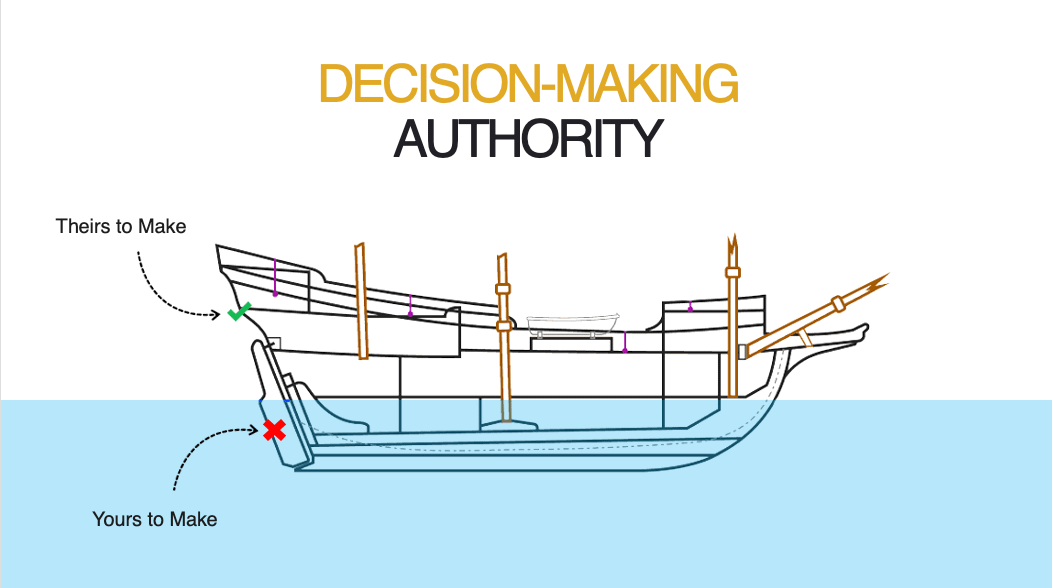
Anything above the waterline is up to you and doesn’t need my approval. Below the waterline? I’d like to participate, because as CEO, I’m responsible for keeping us afloat.
I think the critical takeaway is self-awareness. Are your actions as a leader truly enhancing your team’s performance, or are they born out of a need to control? The hard part is recognizing that different situations, teams, and even stages of a company’s growth need varied approaches.
I always encourage CEOs to regularly reflect on your current level of involvement in your team’s work. Are there areas where letting go might empower others to innovate and grow? Conversely, are there areas where a lack of oversight has resulted in a lack of alignment or progress? If so, it’s time to re-calibrate.
Above all, remember that effective leadership isn’t about emulating someone else’s style—it’s about understanding your own strengths and adapting them to what your organization needs most.