


In 2012, researchers at Duke University’s Fuqua School of Business announced the results of personality tests administered to 3,000 CEOs and CFOs, and the results confirmed what I’ve seen over my career: “CEOs have a more optimistic outlook on their businesses and, more broadly, on life than the general population.” The CFOs in the survey agreed, saying that “their CEOs are more optimistic about almost everything in life.”
Most would consider this instinctively bullish take on the world as an asset to any CEO. After all, would anyone want to be led by a chief executive who wasn’t an optimist? CEOs are called to envision a bright future and make it reality—and plow through countless roadblocks in the process. It’s a job that requires a consistent orientation toward the positive.
However, too much positivity can inhibit the performance of CEOs and their companies, and every leader must strike a balance between looking on the bright side and focusing on hard truths. Read on to see which approach you lean toward, and to discover the hybrid mindset that suits the CEO role best.
The Problem with Pessimism
Despite the Duke research cited above, there are plenty of CEOs who take a distinctly glass-half-empty view of their companies and the world. I should know: I was one early in my career. I was what I call the “Eeyore CEO.”

If you told me you had a great sales prospect, I’d say, “Show me the order.” Show me the order, and I’d say, “Let’s not celebrate until we get the check.” Show me the check, and I’d say, “We knew that was coming. What does the pipeline for next month look like?”
The Eeyore CEO fails in the role of chief inspirer… they’re like a heat-seeking missile for negativity. No one is inspired to work for this kind of leader, especially when the waters get choppy. Eeyore CEOs magnify bad times rather than absorbing the shock and quickly helping everyone get to work on Plan B.
Optimism Overdrive
Even though the drawbacks of the pessimistic approach are clear, optimism—like nearly every virtue—can become a vice when indulged in too frequently, or with the wrong mindset. Whether feigned or deeply felt, over-positivity can have disastrous consequences for an organization.
I’ve written before about what happens when CEOs deliver every bit of news with cheers and hurrahs. This is the “cheerleader CEO,” who thinks it is their responsibility to see the bright side of everything.

They feel that recognition of harsh realities would kill the spirit of the team. But the credibility lost, and the distorted view of reality created with manic pom-pom waving, is the real danger.
Tell the cheerleader CEO you just lost a big customer and they’ll say, “No worries! They were our worst customer anyway!” Tell them that forecasts are now off for the quarter based on the loss, and they’ll say, “I’m confident we’ll make up the difference!” If there’s any silver lining at all, they will fixate on it, missing out on a reality check that might reveal the true problem. If the company drove the customer away because of a weakness of its own, that fact will remain hidden. More customer casualties down the road are likely.
Two Types of CEO Cheerleaders—Both Ineffective
There are two distinct types of cheerleader CEOs, both of whom go too far in the CEO responsibility of infusing the team with positive energy. Cheerleader 1 may not, deep down, be as optimistic as they seem to be, but they’re a master at spinning bad news to keep people from worrying. Meanwhile, Cheerleader 2 truly feels the optimism but gets too caught up in hopefulness to deliver consistent results.
This first type, the deceitful spinner, can be the most damaging. If you’re misleading people about the true state of the company, even in subtle ways, you stand to lose a lot of credibility once the façade inevitably shows cracks. Jim Kouzes and Barry Posner, coauthors of The Leadership Challenge, conducted research showing that Americans rated honesty as the most important attribute they seek in leaders—before “inspiring” or “competent.” The implication is that it’s preferable to not get people pumped up than it is to be caught lying to them about the company’s progress.
The other type of cheerleader, whose over-optimism is driven by sincere feelings, faces a different danger: they may struggle to persevere through difficult times. In his landmark book, Good to Great, Jim Collins interviewed Admiral James Stockdale, the highest-ranking US officer in the “Hilton Hanoi” during the Vietnam War. Stockdale endured repeated torture and eight years in the prison camp before his release. When asked by Collins “Who didn’t make it out?” the admiral replied: “Oh, that’s easy. The optimists.”
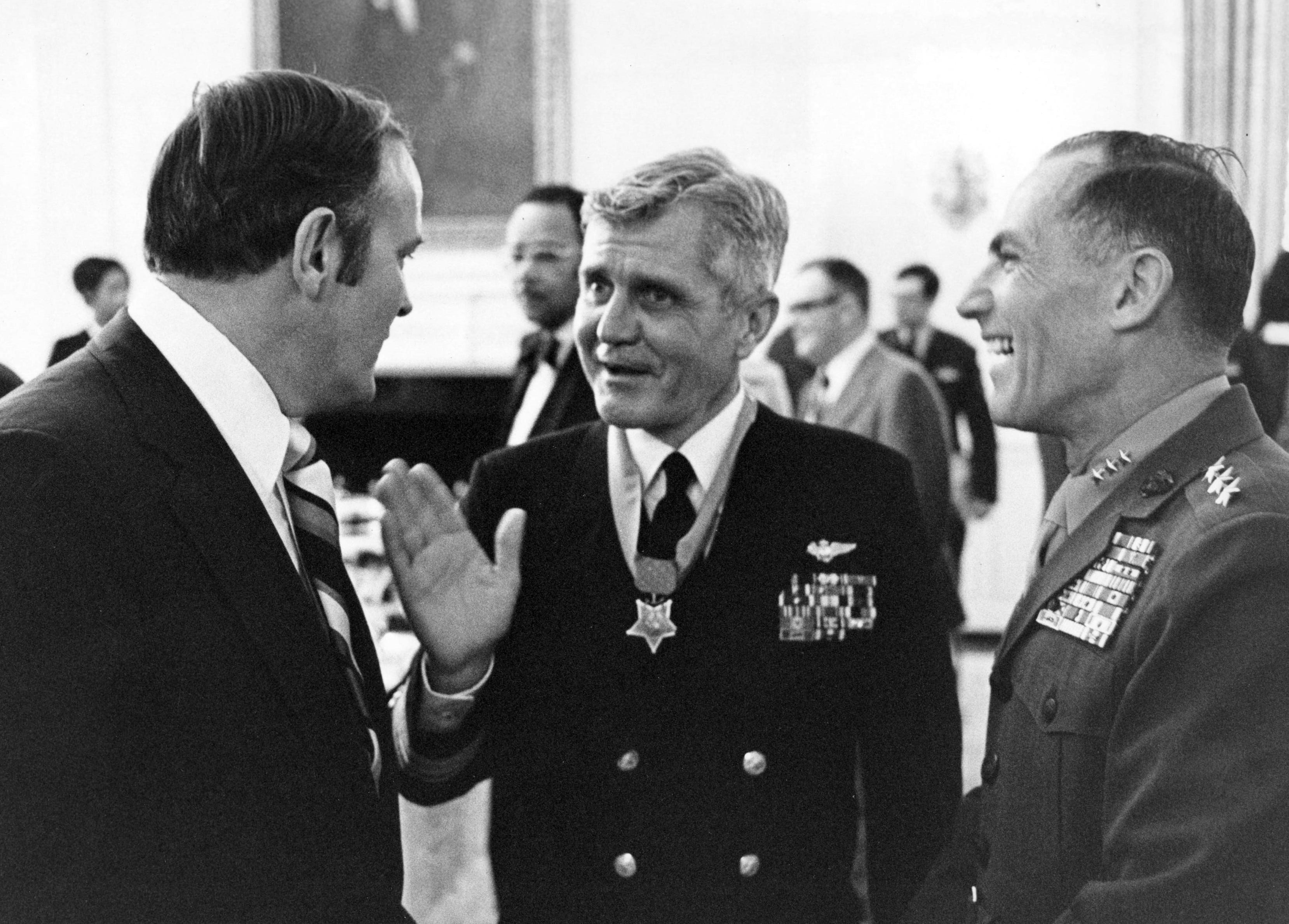
Stockdale explains that the optimists “died of a broken heart” because they would continuously look forward to release before the next holiday—Easter, Thanksgiving, Christmas—and be devastated when it didn’t happen. “This is a very important lesson,” Stockdale says. “You must never confuse faith that you will prevail in the end—which you can never afford to lose—with the discipline to confront the most brutal facts of your current reality.”
Collins calls this the Stockdale Paradox, and it’s where the second type of cheerleader CEO fails. They buy their own rosy outlook and don’t face the “brutal facts,” making them less resilient and less able to correct the problems that develop in any organization.
The Balance: Paranoid Optimism
The well-balanced CEO walks the line between Eeyore-ism and cheerleading. They’re a paranoid optimist, actively encouraging the team and pointing toward success even as they keep a close eye on negative developments (and communicates them transparently to the team when they happen).
GE’s Jack Welch, in his book Winning, addresses this very balance in a discussion of his list of rules for leaders. Rule 3 states that “Leaders get into everyone’s skin, exuding positive energy and optimism,” but, as Welch notes, this rule finds its counterpoint in rule 6—which states that leaders should remain skeptical and not take anything employees tell them for granted.
Welch acknowledges this as a paradox but chooses to look at it not as a troubling puzzle but as a source of fun. “Each day is a challenge,” he writes of such paradoxes, “a brand-new chance to get better at a job that, when all is said and done, you can never be perfect at.” The tightrope we walk on, stretched as it is over a chasm of failure, may intimidate, but most CEOs draw energy from the thrill of facing tough realities with cheerfulness and open eyes.
This is optimism without denial, positivity without delusion. When you can look at a hard truth, fully accept it, and come up with a constructive solution, you’re exercising the brand of optimism employed by the top tier of leaders.
I love how you used Eeyore to describe a type of CEO. I think balance is truly the key. No one wants to work for a negative Nelly, but it’s equally as draining to work for someone who’s constantly trying to put a bright spin on everything.