


Most jobs have a feedback mechanism built in, even if it’s just the occasional 1-on-1 with a manager. Not so with the CEO job. The closest thing you have to a “boss” is the board, and you see them once a quarter or so. If you want performance feedback from them, you’ll probably have to ask—and even then, they don’t see how you operate day to day.
However, there are many subtle signals that you’re being successful in your role as CEO. If multiple of the below things are happening regularly—even the couple that might at first look like negatives—I encourage you to take them as signs you are likely being effective as CEO.
Other companies try to recruit away your employees. I often hear CEOs gripe about their best people getting tempting offers from competitors. Is this frustrating? Yes. But as I always tell those CEOs, it shows that you’ve done a good job building up your talent bench and that your competitors are noticing. The time to worry is when no one’s trying to win away your team members.
People come to you directly wanting to work at your company. If you find that people, especially A-players who may not even be on the market currently, are opening up discussions about working at your company, that’s another great sign. Along the same lines: When people refer family and close friends to work at the company, it speaks louder than anything they could say about the job.
Employees tell you, proactively, when things are going wrong. Busy CEOs often have the classic “Don’t bring me a problem without a solution” mindset. That’s a great way to ensure that you’re the last person to find out when critical issues are going off track in your organization. When your employees come to you with roadblocks, dilemmas, and red flags, take it as a signal that they trust you. Rather than become frustrated, thank them for alerting you. Certainly, take the time to coach them on coming to their own resolution or delegate the issue to the appropriate level of the organization. But it’s better to be hearing about problems than not.
People tell you when they think you’re wrong. In my CEO career, I’ve often told my executive teams that if they always agree with me, they are not being of much use to the organization. Respectful disagreement from an employee is a gift, and it should be received as such. This doesn’t mean you may not ultimately override that person’s opinion, but a CEO has something special when their colleagues act as partners rather than yes-people.
Employees use “we” and “our” language frequently. It's heartening to us CEOs when we hear an employee refer to “our goals,” “our core values,” the initiative “we are working on.” It’s an under-the-radar indication that you’re building an organization with shared goals and shared understanding. If you’re hearing more language like “I did this” or “they did that,” a good place to start is using a lot more “we,” “our,” and “us” yourself.
There are plenty of formal ways for CEOs to get feedback, from a board scorecard (see pp. 234–236 of The CEO Tightrope) to 360 feedback tools. But because of the odd, feedback-light nature of the chief executive role, we have to take encouragement where we can get it. Next time you notice one of these signs, stop and give yourself a quick pat on the back.
The Rundown
The Shelf-Life of a Strategic Decision
No CEO can enshrine a strategy and expect it to last forever. Underlying reality can change at a moment’s notice… even when your strategic thesis has been delivering results for decades.
“We need Boeing to be better,” Southwest Airlines CEO Bob Jordan pleaded this week.
Jordan is understandably concerned. Southwest is only getting 20 of the 80 new aircraft it expected from Boeing this year. Boeing, of course, is weathering an existential-level storm that includes strikes and safety issues and a breakdown that has left American astronauts literally stranded in space.
Southwest is here because of a smart strategic decision made over 53 years ago. Flying just one type of plane, the Boeing 737 family, came with huge upsides when it came to training and switching out flight crews and holding on to a competitive advantage as they scaled up the airline.
It was a strategic decision that served the company well for half a century. Pretty good if you ask me. But now Southwest (facing a YoY profit decline of 65%) is having to consider the downsides that always existed within that decision. It created a single point of failure that yoked Southwest’s fate to that of its only aircraft supplier.
Now is, obviously, a time for Southwest to reexamine its fundamental strategic assumption about the planes it flies and potentially look for other sources of aircraft. The difference between a good culture and a cult is the ability to question assumptions, including ones like “We’re only going to fly Boeing 737s.” In some ways it’s shocking that Kelleher’s strategic gamble had THAT long of a shelf-life… but it’s looking like the expiration date may be up.
Not an easy decision to make.
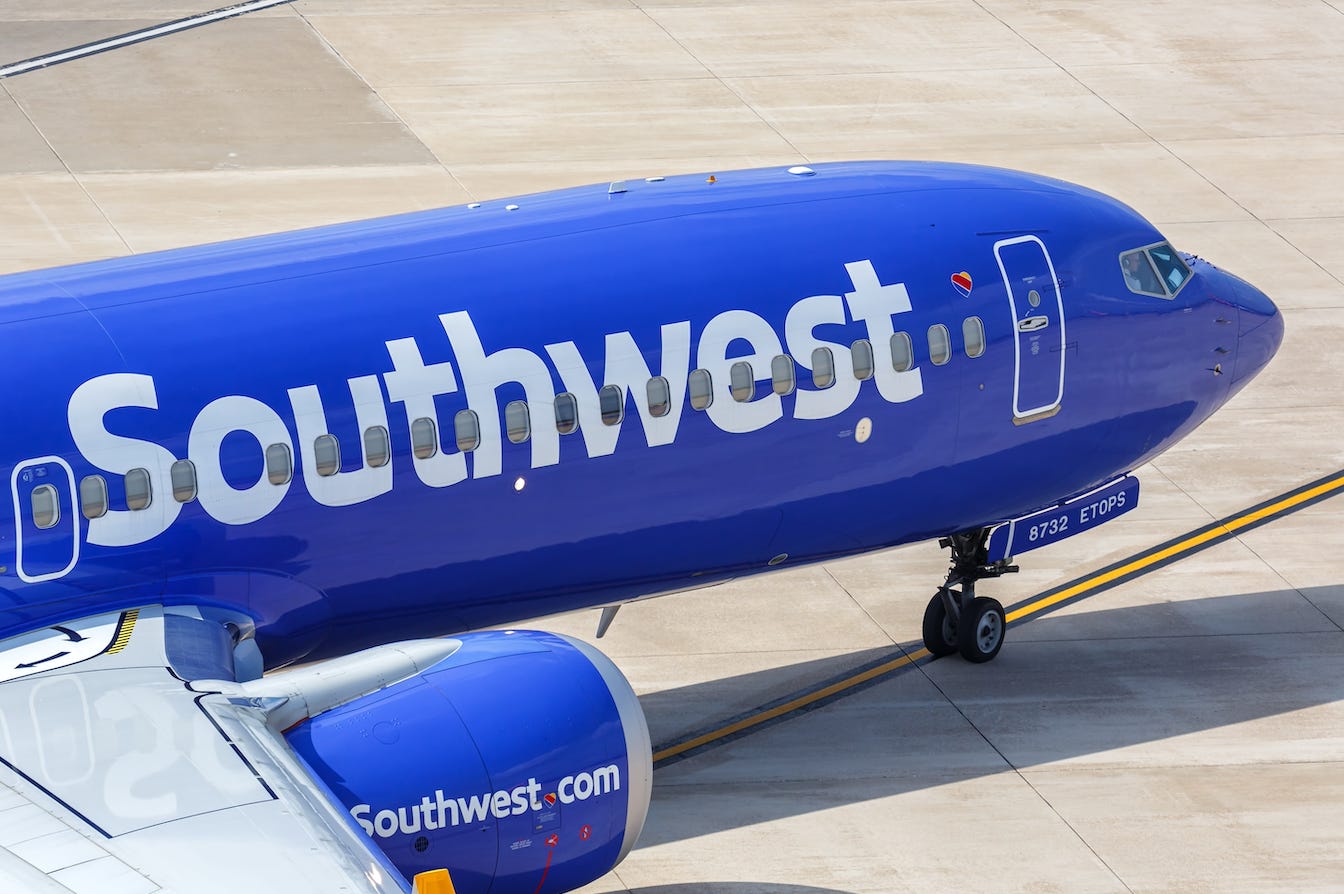
I had the privilege of interviewing Bob Jordan on the morning of his first day as Southwest CEO in 2022. He told me one of his priorities going in was to get the fleet up to 1,000 aircraft. They’ve got it up to 816 (from 735) but to make up that distance could very well require a shift in operating philosophy.
When It Comes to Hiring Trends, It’s Time to Swim Against the Tide
From WSJ:
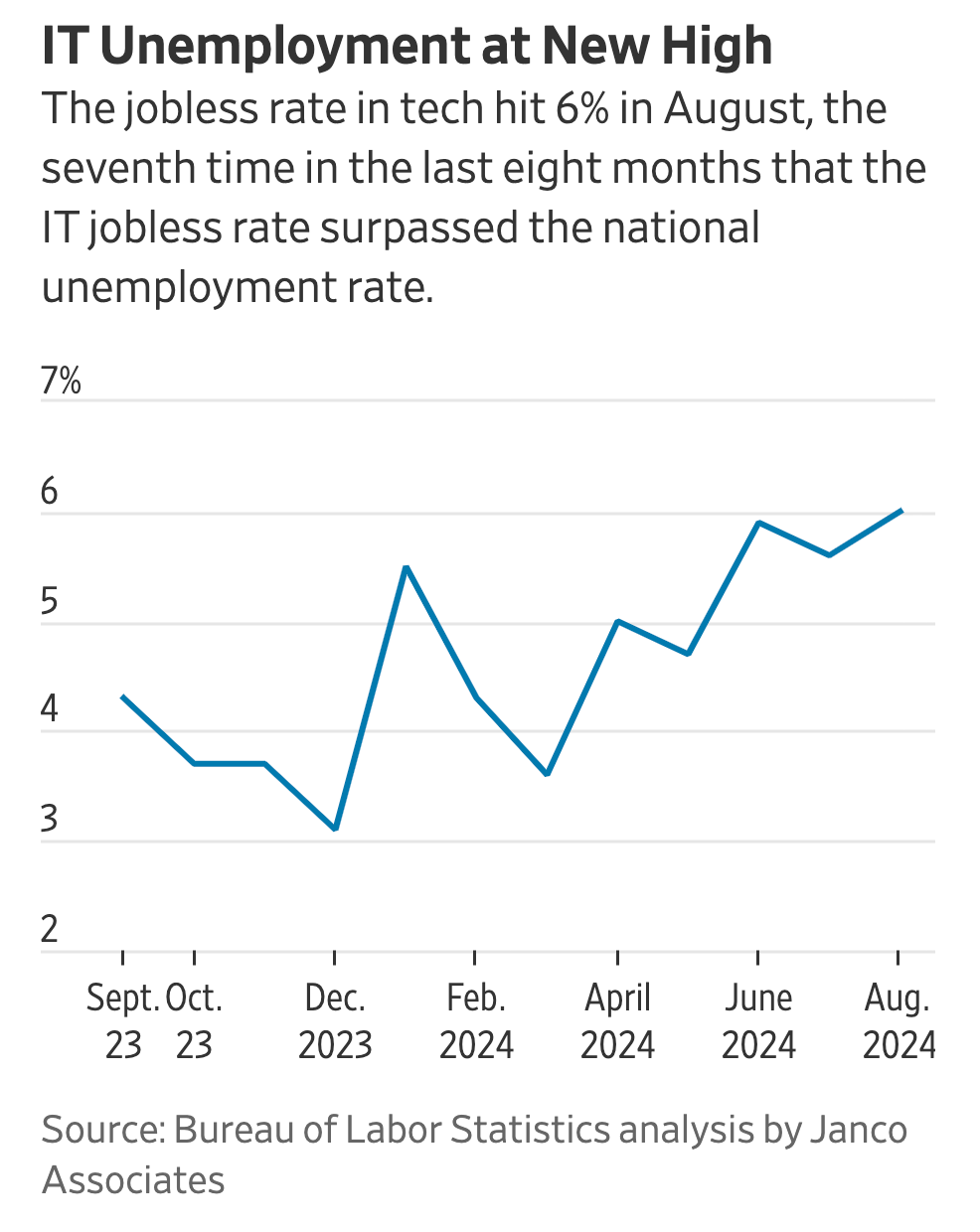
“The unemployment rate for information-technology workers rose to 6% in August, up from 5.6% the prior month as the boom in artificial intelligence continued to drastically alter the tech landscape.
In August, there were 148,000 unemployed IT workers, more than the 145,000 in July, according to consulting firm Janco Associates, which based its findings on data from the U.S. Department of Labor.”
We’ve been in a long period—since COVID, really—where a tight labor market has made it hard to hire great people. But with unprecedented layoffs in tech this year, reflected in the numbers above, a good deal of talent is slipping back into the market. (This is often the case when big layoffs happen, vs. when people are let go because of underwhelming performance.)
I think CEOs would be wise to jolt themselves out of the mindset of hanging on to everyone at the company, even subpar performers. It’s true that overall unemployment is still low (4.1%), but there are more good people available now. Even if there weren’t, no high-performing company hangs on to C-players interminably because finding an A-player would be too much trouble. Good CEOs build recruiting operations that draw in talent even when it’s not on the market. It’s hunting, not gathering.
What if you were one of those companies that had to let people go? You, too, should be recruiting. There’re a tendency to hunker down post-layoff. “How would it look, us hiring after we let 10% of people go?” But you must always be open to upgrading your talent, just like an NFL team would take a better quarterback than they have now if he was available.
The Other Border War
If there’s a loophole in tax law, someone will find it. Such is the case of China sidestepping US tariffs by setting up operations in Mexico, where they can take advantage of the USMCA trade agreement Trump replaced NAFTA with. China can get around the tariffs by shipping its goods to Mexico and completing the very last stages of manufacturing there.
Side note: In my ideal world, the US and Mexico would have even freer trade between them, so US companies could use the lower-cost labor force to provide the lowest cost possible to the consumer. But with all the current immigration and drug issues at the border, that kind of arrangement becomes an impossibility.

“A surprising number of people find these three words terrifying: set a goal." —Bill Canady
"We are engulfed in the cult of the charismatic leader lionized for displays of confidence, who single-handedly propels a company to phenomenal success. This idolatry obscures the truth of what it takes to be a great CEO.” —Claudius Hildebrand and Robert Stark
“It’s not always the people who start out the smartest who end up the smartest.” ―Carol S. Dweck
Stat of the Week: A Quarter of Google's Code Is Now AI-Made
📊 25 percent of Google's code is now generated by artificial intelligence, said CEO Sundar Pichai in the company's Q3 earnings call.