


Great companies win by design.
It sure would be nice if the CEO could just get a bunch of smart people together and have them all work together perfectly.
Unfortunately, that’s just not human nature. The bigger a company grows, the more you need strong internal management systems that define how success is achieved.
I’ve always been interested in CEOs and executive teams who develop systems like this, especially when they are robust, proprietary systems that grow straight out of the organization’s DNA.
When this is done right, the management system gives the company a playbook to rely on. That in turn gives them an almost unbeatable advantage in the market.
With a great system, employees understand the established rules of the game. And in every corner of the team, even if your employees are far-flung across the globe, they’re equipped with interconnected operating principles.
Today I want to look at at few of these management systems that have been created over the years.
Reviewing these is a good way for any CEO to assess their own internal systems. If someone asked what your equivalent of one of these systems is, would you have an answer?
Contents
I. Alan Mulally’s “Working Together”
II. The US War Department’s “Training Within Industry”
III. Google's Objectives and Key Results (OKRs) + Project Aristotle
IV. GE’s Work-Out
V. Amazon’s Leadership Principles
I. Alan Mulally’s “Working Together”
Alan Mulally’s “Working Together” system was the management philosophy and operational framework he developed and refined throughout his career, most notably during his transformative tenures at Boeing Commercial Airplanes and Ford Motor Company.
The system is built on 12 core principles and practices that create a culture of skilled and motivated teams.
People-Focused Principles
People first, love 'em up. Include, appreciate, thank, and celebrate team members
Everyone is included. True stakeholder-centered leadership involving all parties
Respect, listen, help, and appreciate each other. Essential for psychological safety
Have fun. Enjoy the journey and each other with gratitude
Operational Principles
Compelling vision, comprehensive strategy, and relentless implementation. Clear direction with consistent execution
Clear performance goals. Unified objectives that pull everyone together
One plan. Single, coherent strategy everyone understands
Facts and data. Decision-making based on reality, not just opinions
Communication and Problem-Solving
Everyone knows the plan, status, and areas needing attention. Complete transparency using color coding:
Green=on plan
Yellow=issue with solution
Red="gems" needing help
Propose a plan, positive "find-a-way" attitude. Solution-oriented mindset
Emotional resilience, trust the process. Expect the unexpected and maintain system integrity
Outcome Focus
PGA (Profitable Growth for All) - Creating value for all stakeholders and the greater good
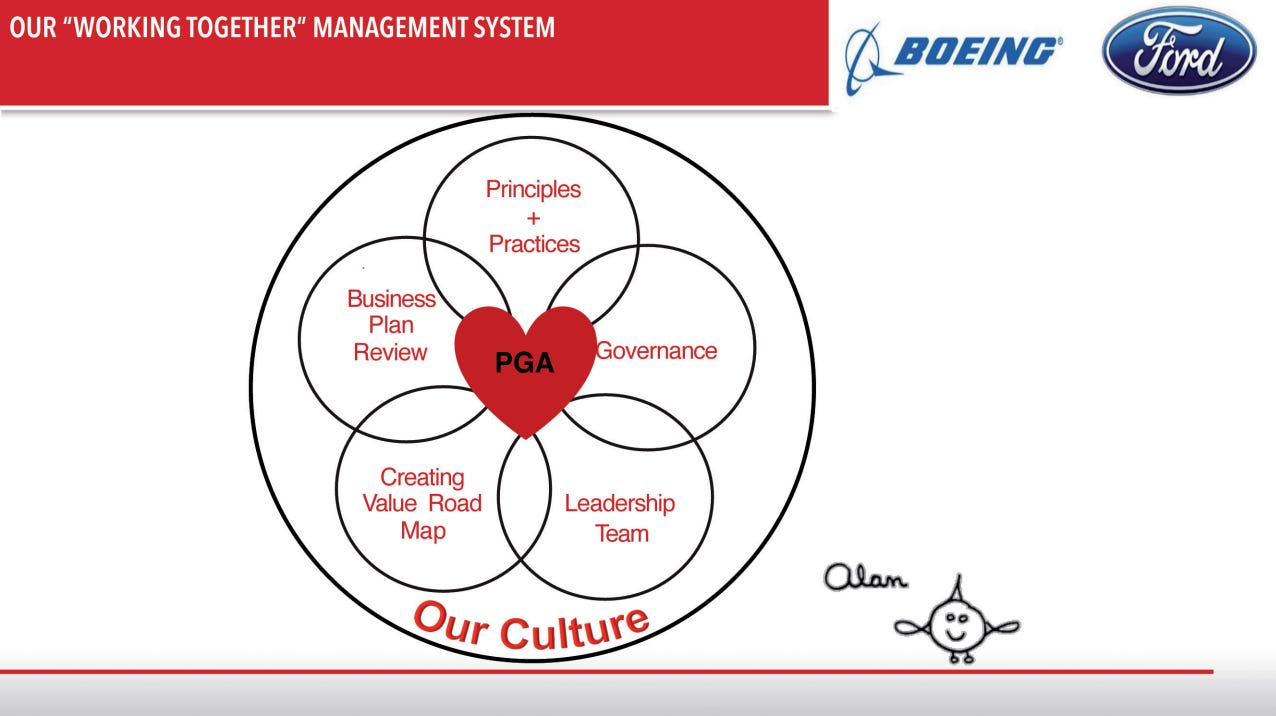
The system operates through five interconnected elements centered around PGA:
Principles and Practices - The foundational culture and behaviors
Governance - How decisions are made and stakeholders are managed
Leadership Team - Stakeholder-centered leaders committed to the system
Business Plan Review - Weekly progress meetings with full transparency. The entire leadership team meets weekly to review all aspects of strategy, plan status, and identify issues requiring attention. Critically, "gems" (red items without solutions) are celebrated and addressed in separate special attention meetings.
Creating Value Roadmap - Strategic planning process incorporating environmental factors
II. The US War Department’s “Training Within Industry”
Training Within Industry (TWI) was a US government program created by the Department of War from 1940-1945 to address workforce shortages during World War II. As skilled workers were being drafted into military service while war production demands increased, TWI provided consulting services to help industries quickly train inexperienced workers.
I am generally skeptical of the government doing much of anything well, but the military does have an excellent track record on leadership development, and the TWI system offers a solid framework for training employees in the private sector.
TWI developed four main 10-hour training courses:
Job Instruction (JI) - Teaching supervisors how to train new workers effectively
Job Methods (JM) - Helping workers analyze and improve job efficiency
Job Relations (JR) - Training supervisors in effective people management
Program Development (PD) - Teaching how to solve production problems through training
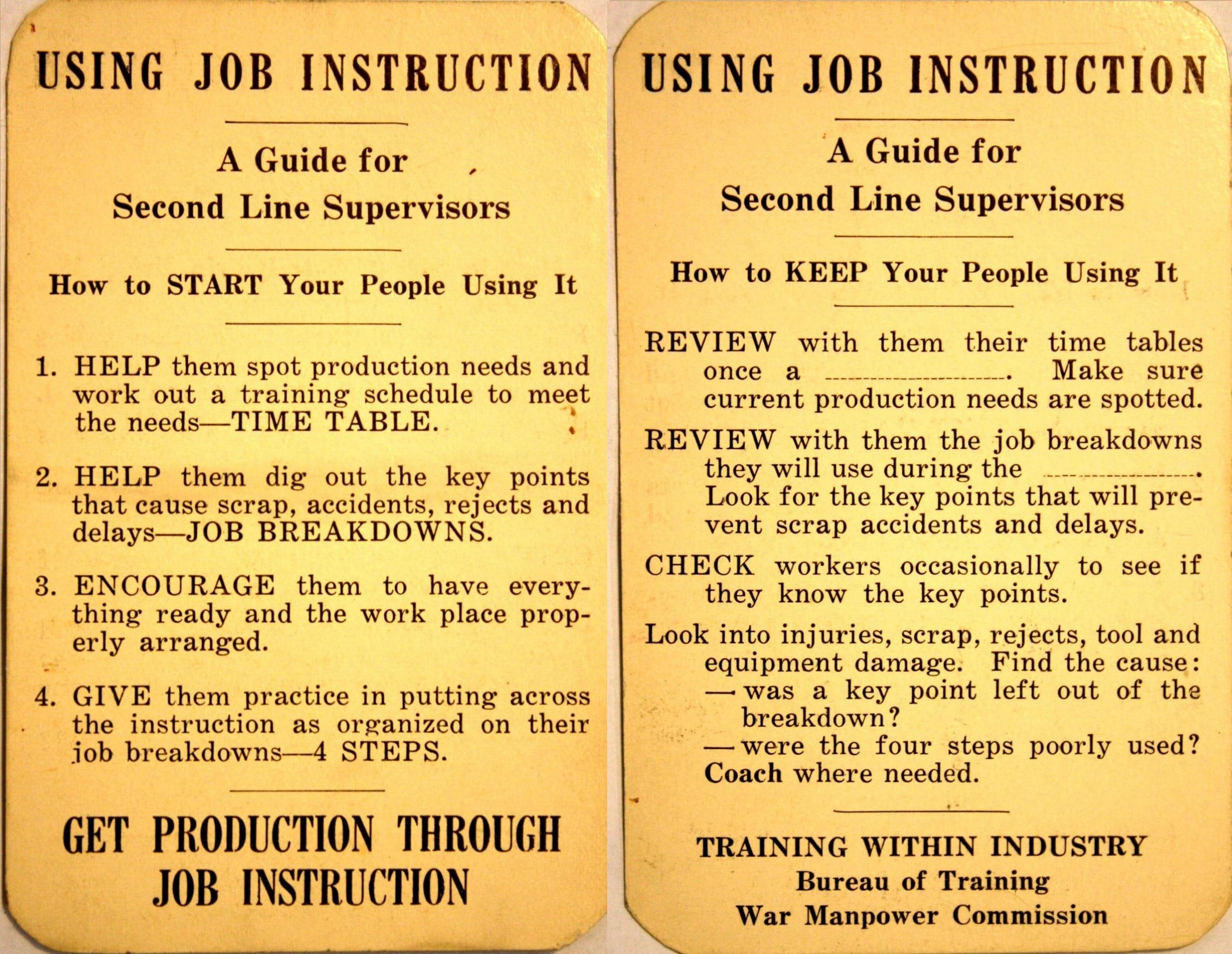
By the war's end, over 1.6 million workers across 16,500+ plants had been certified. The program's most significant long-term impact came through its post-war expansion to Japan, where it became the foundation for things like
Kaizen (continuous improvement) culture
Toyota Production System
What the West later called “Quality Circles”
III. Google's Objectives and Key Results (OKRs) + Project Aristotle
Google’s OKR system is the goal-setting framework that has powered the company’s explosive growth from a startup to a trillion-dollar giant. Introduced by venture capitalist John Doerr in 1999 (inspired by Intel’s Andy Grove), OKRs became Google's DNA for translating ambitious vision into measurable execution.
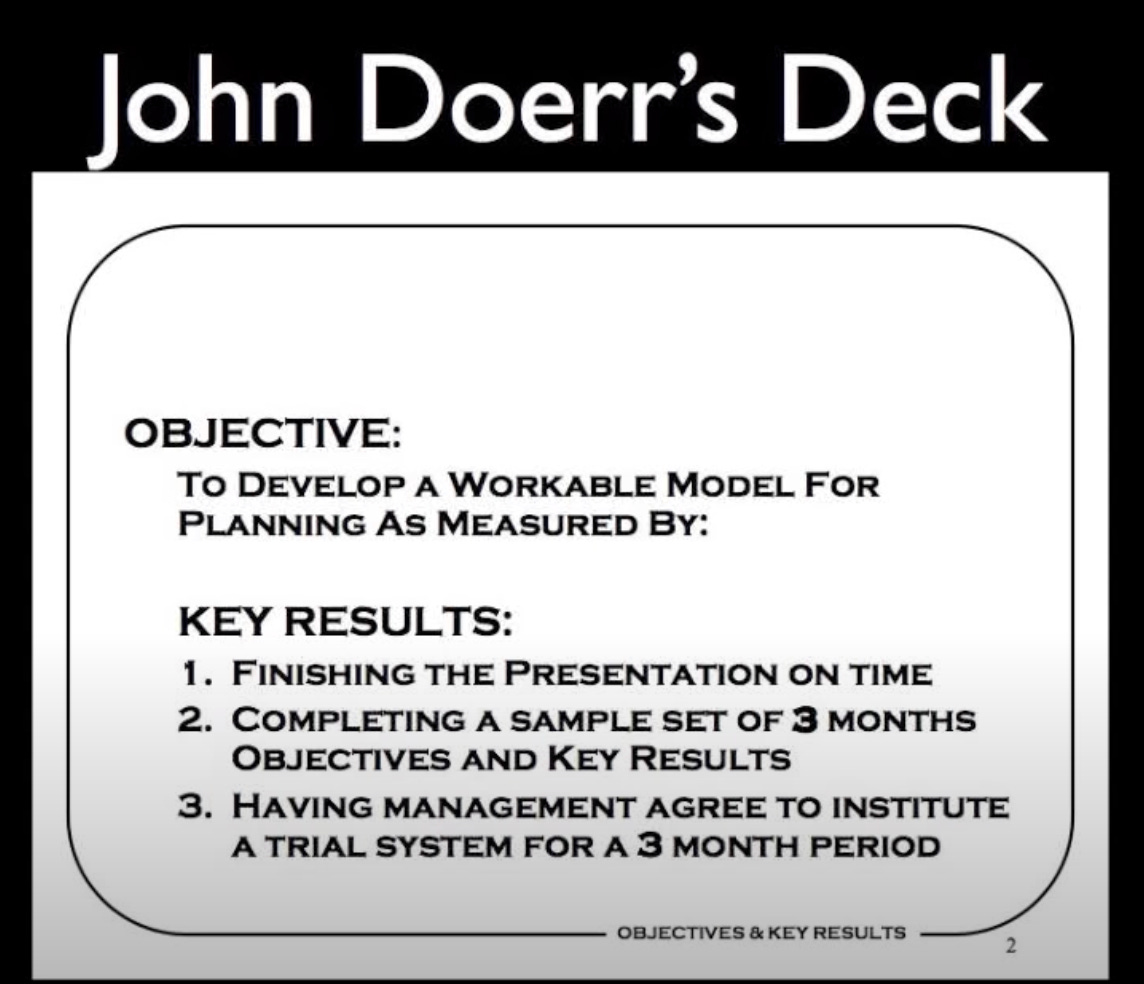
The system operates on a simple but unique goal structure:
Objectives - What you want to achieve. These are qualitative, inspirational goals that provide direction and motivation.
Key Results - How you'll measure success. These are quantitative, time-bound metrics that track progress toward objectives.
Core OKR Operating Principles
Transparency Above All. Every employee's OKRs are visible company-wide, from Larry Page down to new hires. This radical transparency ensures alignment and prevents duplicate efforts.
Stretch Goals. Teams are expected to achieve only 60-70% of their OKRs. If you're hitting 100%, you're not thinking big enough. This "failing" at ambitious goals is celebrated as pushing boundaries.
Quarterly Cycles. OKRs reset every quarter, allowing rapid course correction and maintaining startup agility even at massive scale.
Bottom-Up and Top-Down. While company-wide OKRs cascade down, individual contributors also propose their own objectives, creating ownership at every level.
Separation from Performance Reviews. OKRs focus on impact and learning, not individual evaluation, encouraging bold risk-taking without career penalty.
The system creates what Google calls "uncomfortably exciting" goals that stretch teams beyond incremental improvements toward breakthrough innovation. It's the management framework that helped coordinate everything from Search algorithm improvements to moonshot projects like self-driving cars.
Project Aristotle: The Human Operating System
While OKRs define what Google teams should achieve, Project Aristotle discovered how they should work together to achieve it. Launched in 2012, this internal research initiative analyzed hundreds of Google teams to decode the secret ingredients of high performance.
The findings challenged conventional wisdom. Team composition, individual talent, and even leadership style mattered less than expected. Instead, five key dynamics determined success:
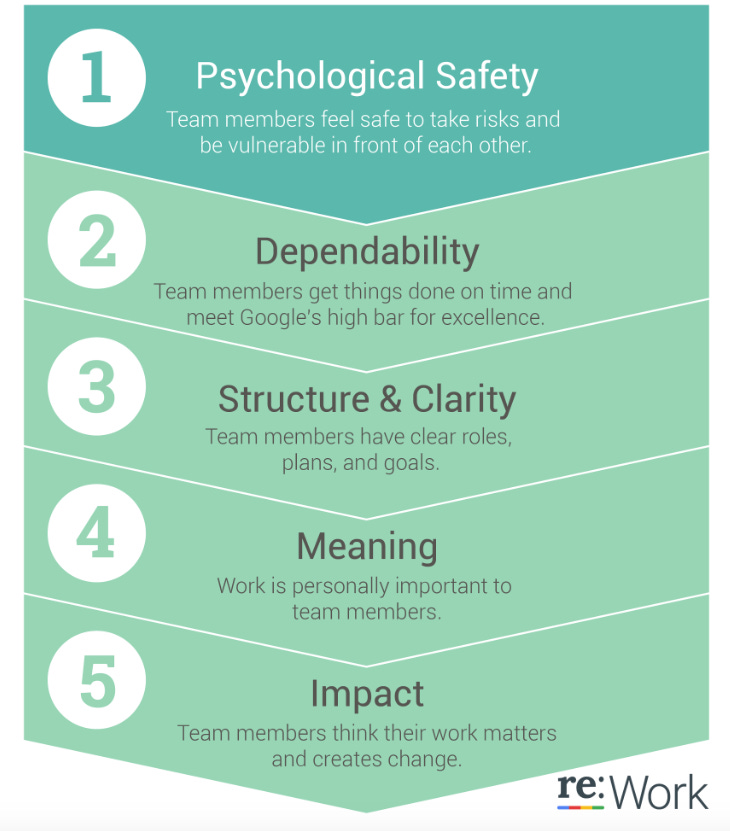
Project Aristotle revealed that psychological safety acts as the multiplier for all other factors. Without it, even the most ambitious OKRs become exercises in risk aversion and blame shifting.
Together, OKRs and Project Aristotle form Google's complete management ecosystem.
IV. GE’s Work-Out
Jack Welch developed his Work-Out system at General Electric in the 1980s with a primary goal of improving collaboration and reducing silo-ization. The system operates on a simple four-step foundation:
Assemble the Right People - Bring together employees closest to the problem, regardless of hierarchy. These are the people who actually do the work and understand where the inefficiencies hide.
Challenge Creative Solutions - Teams brainstorm without boundaries, identifying “low-hanging fruit” bureaucracy through the RAMMPP framework: Reports, Approvals, Meetings, Measures, Policies, and Practices that add no value.
Make Immediate Public Decisions - In the “Town Meeting,” senior leaders must say yes or no to recommendations on the spot, in front of all participants. No committees, no studies, no delays.
Empower Implementation - Each approved recommendation gets an “owner” who drives execution with clear accountability and regular reviews at 30, 60, and 90 days.
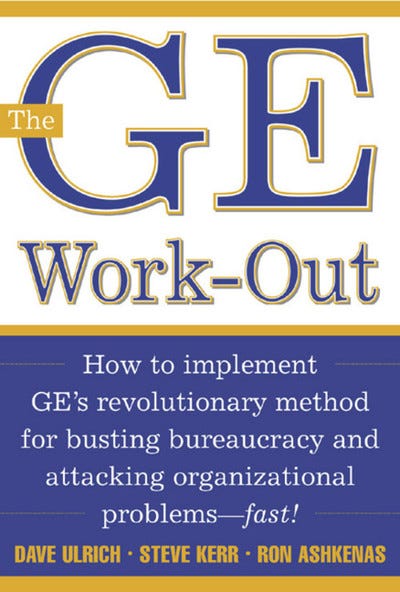
Work-Out can be customized around three primary objectives: bureaucracy-busting for immediate cost savings, process improvement for operational efficiency, and value chain strengthening to optimize supplier and customer relationships. The methodology scales from single-day “blitz” sessions targeting quick wins to extended multi-stage efforts addressing complex organizational challenges.
The Town Meeting is probably Work-Out’s biggest departure from traditional corporate decision-making. Instead of recommendations disappearing into management black holes, teams present directly to leaders who must decide immediately. This creates psychological safety for bold ideas while forcing executives to abandon the temptations of analysis paralysis and can-kicking.
V. Amazon’s Leadership Principles
Amazon hasn’t published a full playbook of its internal management system, but it has codified a strong latticework of principles and mechanisms that guide how the company operates. Together, they form one of the most recognizable management systems of any modern corporation.
At the center are Amazon’s sixteen Leadership Principles. These include Customer Obsession, Ownership, Invent and Simplify, and Hire and Develop the Best. They are more than posters on a wall: every hiring decision, promotion, and performance review is explicitly tied back to them.
Around these principles are a set of operating mechanisms that translate values into action:
Working Backwards (PR-FAQ). New initiatives start with a mock press release and FAQ, forcing teams to define the customer benefit before building.
Six-page narratives. Meetings begin with silent reading of a written memo, replacing slides with structured reasoning.
One-way vs. two-way doors. Leaders distinguish between reversible and irreversible bets, biasing toward speed when possible.
“Disagree and commit.” Teams are expected to debate vigorously, then align fully once a decision is made.
Bar Raisers. A trained cadre of interviewers ensures each new hire raises the talent bar.
Correction of Errors (COE). Root-cause reviews treat problems as systemic learning opportunities.
Weekly Business Reviews. Leaders track controllable input metrics as closely as output results.
Single-threaded leaders. Key initiatives are given dedicated owners with no competing responsibilities.
Some pieces of this system (such as performance management rubrics or detailed planning templates) remain internal. But even the public framework shows a culture of clarity, discipline, and relentlessness in service of the customer. It is a system that may not suit everyone, but one that has consistently delivered excellence at global scale.

As an enthusiast of good management systems, I have of course built my own, both at the CEO level and the downstream manager level.
You’ll notice that the systems above are clearly shaped to support the needs of each CEO or company that developed them. That’s why not every management system is going to work perfectly out of the box. But I have found that the systems I built over my career are adaptable to nearly every business with some light tweaking to shape the culture, strategy, and goals.
If you’re interested in setting such a system up in your organization, let’s talk. Shoot me a DM here or email me at joel@ceosys.co.