


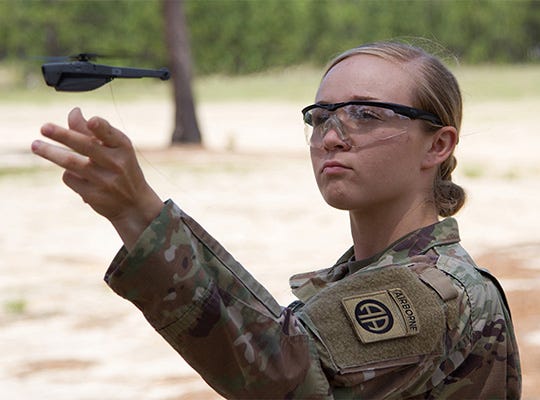
The US Army uses the catchphrase “every soldier is a sensor” to emphasize the importance of soldiers sharing their on-the-ground insight with commanders.
Whether it’s the sighting of enemy aircraft or unusual movements of farm animals, these bits of human intelligence can make the difference between success or failure, between life and death, on the battlefield.
According to the army field manual The Warrior Ethos and Soldier Combat Skills:
The "Every Soldier is a Sensor" (ES2) concept ensures that Soldiers are trained to actively observe for details for the commander’s critical information requirement (CCIR) while in an AO (area of operation). It also ensures they can provide concise, accurate reports. . . . Every Soldier develops a special level of exposure to events occurring in the AO and can collect information by observing and interacting with the environment.
A similar dynamic is at play in modern organizations—call it “every employee is a sensor.” In any fast-changing field, leaders need employees to act as sensors, taking in the situation from their perspective and rapidly sharing that data in a way that drives responsiveness from the rest of the team. When this agility and communication is in place, the organization is fully positioned to serve its customers to the best of its ability.
To help your employees to act as sensors, ensure that these three critical components are in place:
Employees must stay vigilant (and know what to look for).
Some drill sergeants have been known to place sandbags under trainees’ bunks to see how long it takes the trainee to spot the abnormality and alert others to it. The message is clear: We need soldiers to be constantly vigilant and aware of their surroundings.
Reinforce the same value with your employees, pointing out that you need them to be your eyes and ears, always alert to threats and opportunities faced by the business. For example, if one of your customer service reps keeps hearing the same concern from multiple customers, you may be able to vastly improve its product/services by fully addressing that concern early in the process.
When a goal is derailed at the last minute or a key opportunity is missed, debrief with the team on what went wrong. Were any key signs missed? Is there something in particular you need employees to be on the lookout for in coming months?
Employees must have a mechanism for sharing insight.
An insight is no good if it stays bottled up with the employee or is handed off to the wrong person. Your team needs a centralized, consistent place to share their insight. In other words, your sensors must be connected into a well-organized network.
This is one of the most challenging aspects of collecting human insight, especially if your organization is on the larger side. In the Army, soldiers’ observations and insight are transmitted up the chain of command to the S-2, the security officer, who then ensures that it informs future action.
Employees must feel safe sharing insight.
Finally, your sensors need to know that leadership supports them even when they’re sharing hard-to-share data. Good news usually rockets to the top of the organization, while bad news festers at the bottom—but it’s the insights that point to obstacles or problems that are usually the most important to share.
Let your entire organization know that you value—and call for—honesty in sharing these problems. Make sure people understand that the point isn’t to punish anyone, but to keep the business performing predictably and meeting the needs of its stakeholders.
As a leader, you need insight from everyone, down to the frontline, to understand the true state of play. Taking a few simple steps to capitalize on what your employees see and hear every day increases not only the cohesion of your team but the performance of your entire organization.