


It’s a rare skill in business when you can see around corners.
In 2022, before OpenAI had debuted ChatGPT, Wes Cummins pivoted his Bitcoin mining operation into building AI data centers. It turned out to be a case of seeing the future before it got here.
Today, these AI data centers power our world’s insatiable hunger for GPUs. Cummins’ Dallas-based Applied Digital now has $16 billion in contracted revenue over the next 15 years and two hyperscale customers. Its first facility came online this month, putting it well ahead of many others who are just breaking ground.
In the conversation that follows, Cummins told me about how he saw the demand spike coming, why the CEO role feels like going from fan to head coach, and whether we’re hyping AI like it’s 1999.

Take us back to 18-year-old Wes. What was your grand plan?
I grew up on a potato farm in Idaho. Leaving and going to St. Louis, Missouri to school was a big shock for me.
By 18, my professional football aspirations had gone out the window. I did play football in college, but at an academic focused institution. It was a great experience. I started doing electrical engineering and my premed curriculum because I didn’t know what I was going to do. I decided to take some business classes and I just fell in love with it.
From there, I got an internship at an investment firm. This was right in the dot-com era, 1999 and 2000. So I got a lot of exposure to tech investing – the good part at first and then the bad part after that.
I fell in love with investing and technology, and from there I ran my own hedge fund. That was until about five years ago when I saw a big market shift. I’d seen these shifts as an investor before. This time I decided I would go all in and actually start a business to seize on that shift. That’s how Applied Digital started.
CEOs and investors see the world very differently. What was your biggest surprise switching from an investing role to running the business?
A lot of investors say they take the long-term view. Before I was CEO, I thought I worked with a long-term view.
But when you’re looking at it from a CEO horizon, things look really different. I saw how short-term-oriented I really was as an investor. Even as a long-term investor, you’re basing decisions on no more than a year out. That feels “long term” in public markets. As a CEO, you’re thinking more like three to five years out. That’s been a huge shift for me.
The other aha moment had to do with managing people. In the investment world, I could run a big successful hedge fund with very few people and one or two specific skill sets. As CEO, especially as we grow fast, I need lots of different people with very diverse skill sets.
What I’ve loved about it is feeling like the head coach. I’ve got to make sure I’m putting the right players on the field. As an investor, I was more of a fan.
What I’ve loved about it is feeling like the head coach. I’ve got to make sure I’m putting the right players on the field. As an investor, I was more of a fan. What does the fan do? They get really upset or they get really happy depending on whether the team wins or loses. But as the head coach, you’re much more invested. You’re developing the team, you’re developing the team strategy, you’re developing everything.
Applied Digital started out building infrastructure for Bitcoin. Can you talk about the pivot to AI?
When we took on the opportunity to build Bitcoin data centers in the United States, we did the hyperscale route for Bitcoin and helped make Marathon the largest Bitcoin miner in the world. Now we’re doing that same thing for AI. There are other Bitcoin miners who transitioned to do AI, but we were really early – we started in 2022, before ChatGPT.
That early arrival let us do things at a smaller scale and learn. We could stub our toe and be OK. Originally, we looked to other players in the Dallas data center market like Aligned, Compass, and CyrusOne. Those are the companies we aspired to be.
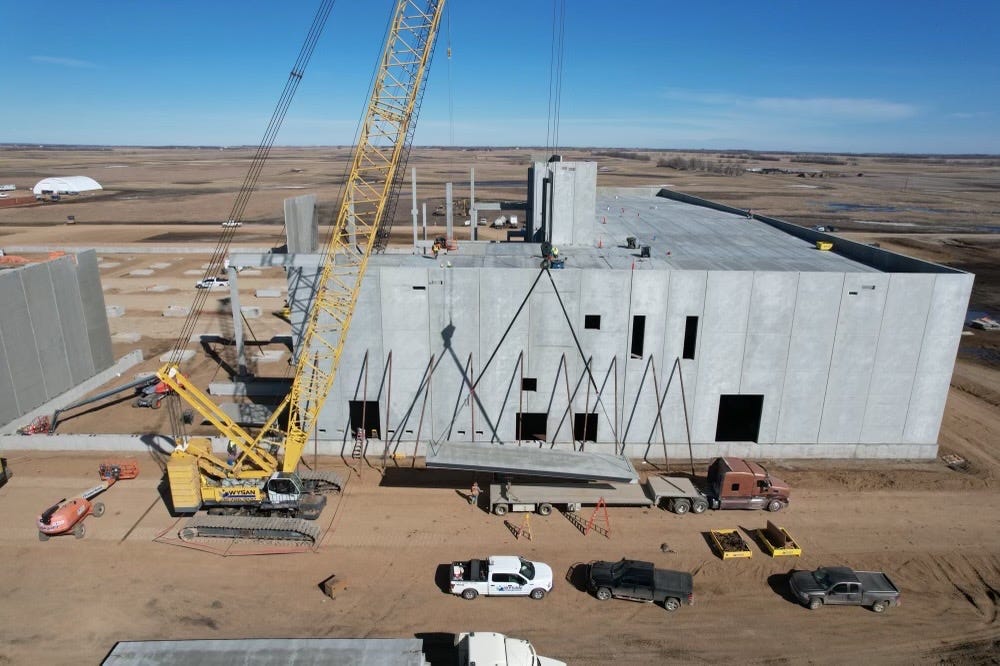
Now we’ve accomplished a lot - we have two hyperscale customers, $16 billion of contracted revenue over the next 15 years, and we’ve delivered one of our buildings [in Ellendale, ND].
Is it a similar process building Bitcoin data centers versus AI factories?
They both involve large-scale power and high-power-density builds, but the data centers themselves are wildly different.
We said, “Look, Nvidia is the leader in this market. Let’s just design to the Nvidia roadmap.” That’s been a good choice for us.
Those were some of the things we stubbed our toes on. At first, we tried converting one of our Bitcoin facilities to do AI. It didn’t work. Then we built a scaled-down version with a 10-megawatt build. That wasn’t going to scale. Fortunately, we hired the right people and worked directly with Nvidia’s data center design team back in 2023. We said, “Look, Nvidia is the leader in this market. Let’s just design to the Nvidia roadmap.”
That’s been a good choice for us. I’m grateful that we started this early. We’ve made those mistakes and we corrected them.
There has to be a line outside Jensen Huang’s door of people who want to partner with Nvidia. How did that come about?
I was one of the very few, if not the only crazy guy in the market in 2023.
I got in front of companies like Super Micro and Dell saying, “Guys, look, I know you can’t get your hands on enough Nvidia equipment right now because of all these manufacturing bottlenecks. Yes, they’re going to fix the wafer throughput and all that and you’ll get more GPUs. But I’m telling you, the data center capacity that needs to be built for all these GPUs doesn’t exist yet. That’s going to become the problem. So come and partner with us now.”
I made that pitch early. By the time mid-2024 rolled around, we started seeing that data center capacity would indeed be the bottleneck. Now it’s all anyone talks about. Fortunately, by getting in early, we set ourselves apart. They could see we were solving one of the critical issues for GPU deployment and AI compute deployment.
Because we started early, we locked in supply chain early, too. That gives us the specialized electrical equipment, cooling equipment, etc. that allows us to execute.
In the Internet bubble, we thought fiber would be the answer to all life’s questions. Do you worry there will be a similar overbuild situation with AI infrastructure?
As you could imagine, I think about that a lot.
There’s no doubt the world is being transformed now like it was back then. But what I remember from back then is that is all people wanted to talk about was what stock they own. Nothing had any revenue.
There was also a level of hype that was disconnected from reality. In school, I remember sitting in an MBA course listening to a guy from Idealab [an incubator] and a guy from a specialty chemicals company. The incubator guy said, “I could put you out of business in two months with a B2B exchange.” I was 21 at the time, but I remember thinking, “But someone has to make the chemicals, right?”
There’s of course hype in the AI boom as well. We’ve had a little reality come back into the market in the last couple months, which I think is healthy. You don’t want it to echo ’99 and 2000, when the crazier and more bombastic the announcement, the more your stock goes up, whether you can achieve it or not. I’ve seen plans to launch GPUs into outer space or sink them to the bottom of the ocean.
But the biggest difference now is that we’re actually using the infrastructure as it’s built. As soon as you can bring the compute online, the big players are using it. That’s not like the fiber buildouts, where it took eight or 10 years for it to get used.
You don’t want it to echo ’99 and 2000, when the crazier and more bombastic the announcement, the more your stock goes up, whether you can achieve it or not. I’ve seen plans to launch GPUs into outer space or sink them to the bottom of the ocean.
Here, the compute is getting gobbled up in real time. ChatGPT probably hits a billion weekly average users by the end of this year. They hit a billion queries per day on the app in May of this year. That was in less than two and a half years. It took Google 11 or 13 years to hit a billion queries.
I’ve never seen something happen that fast. My kids don’t talk about Googling things anymore. They say, “Ask Chat!”
Then the other big difference is the biggest most profitable companies in the world are spending the most dollars on AI. In the dot-com boom, it was all funded by capital markets. Today, you have real cash flows funding the vast majority of this CapEx.
The other difference I’d point to is the even bigger demand that’s on the horizon. Right now we’re still building capacity for LLMs, so just chatbots. When we get robots involved, a huge amount more of compute capacity will be needed.
Has AI changed the way you do your job as CEO?
We deploy it some through our company and it will be more and more. What I think is important is that enterprise is always slow. I’ve been a tech investor for a long time and you see that again and again.
We do see companies announcing layoffs because of AI efficiency, but I think much of that is cover for regular layoffs.
There’s the MIT study about 95% of enterprises don’t see the benefit, I think that’s because enterprise is always slow. Every major tech revolution is consumer-led. From an enterprise perspective, I think you’re going to start seeing a big impact later. We do see companies announcing layoffs because of AI efficiency, but I think much of that is cover for regular layoffs. I think more is coming.
One of the challenges when you move into the CEO role is you have to hire executives in areas you haven’t worked in before. What have you learned about hiring and managing executives?
The secret sauce for me has been leaning on experienced board members.
For example, I have one gentleman who was very high level at Motorola when Motorola was big and then went through hard times. He’s been CEO of public companies. He’s done his own startup that he took public before. Having someone with that kind of experience helping me fill the spots we needed to fill has been huge.
There have also been some people who started with us who grew really well into senior-level positions. Frankly, that’s the easiest route by far.
We’ve definitely made the mistake of hiring someone from a large company because their resume and background is impressive. We found we’re just not at the level where we want that kind of bureaucracy and slowness and hierarchy. It slows the company down.
Hiring the right recruiter that has been great for us. Our chief development officer was a super key role for us. So was our chief operations officer. We went outside to hire those, but I relied on my board members and the executive search firm.
What do you know about your industry that CEOs in other industries might be surprised by?
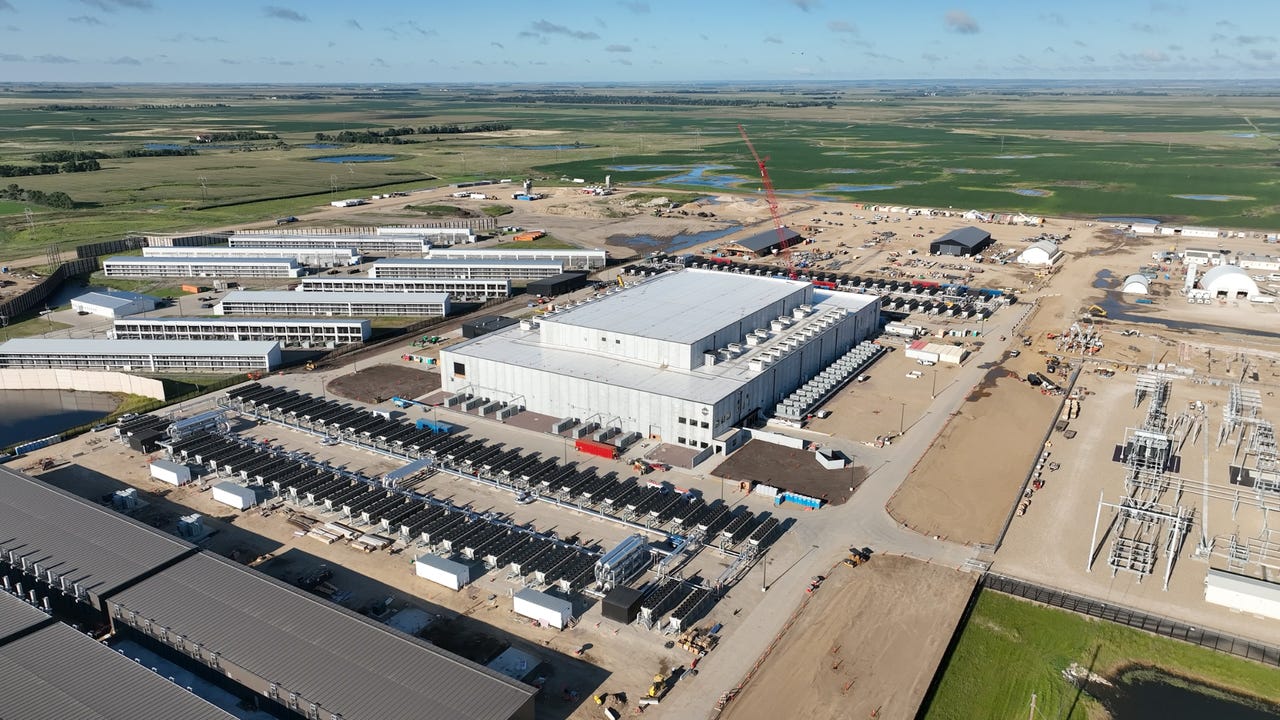
Our industry is really unique in that we’re scaling so much capital. We have a campus in Ellendale, North Dakota, where we’re going to spend $5 billion on four buildings. We have one in Harwood, North Dakota, where we’re spending over $3 billion for three more buildings. Those are our two campuses, and we have $8 billion of spend over a 15- to 24-month time frame.
Before maybe late last year, no one really knew what the data center industry was. It’s this cottage industry but we’re scaling so much capital. If you’re watching Netflix at night, the data center industry is running that. If you’re using your office apps, this call we’re on right now - the data center industry is running that. It’s the complete backbone to our entire digital economy. Now everyone knows what it is because of AI.
What’s next for you and Applied Digital?
We’re negotiating for two or three other campuses at the moment. The demand just keeps coming.
We’ve developed an ability to execute on construction and financing - that’s a critical pillar too. We have a big partnership with Macquarie Asset Management, the largest infrastructure investor in the world. It’s a $5.5 billion commitment from them. We expect to just continue to add more customers and scale across more sites.
It’s been a fun last 12 months with a lot of big announcements and wins. But now the industry is going to have to mature and build and deploy and take these facilities online. We’re already doing that and I think we’ll remain a leader going forward.