



The CEO role at scale is fundamentally a communications job.
This runs counter to popular conceptions of the chief executive. Aren’t they supposed to be the ultimate executors, people who do instead of talk? But once a company grows to a certain size, the CEO does very little direct operational work in the business. (And if they try to, they won’t be able to function as CEO for long.)
Instead, the professional CEO’s success hinges on their ability to communicate in a way that keeps the team aligned and executing. This is the role in which they offer the most distinctive value.
I’m talking about the things that great CEOs live and breathe:
Articulating a vivid vision that inspires the team
Reinforcing the differentiating values that define company culture
Explaining the strategic intent that must guide employee decision making
Discussing the company’s core objectives and measurements
Offering support to the team in challenging times
Unfortunately, this facet of the job feels unnatural to many CEOs. Speaking in DISC terms, the typical leader who inhabits the CEO role falls into the (D)ominance category, meaning they are drawn to rapid action and concise communication. D-types get a dopamine hit from getting things done. They don’t really want to waste time talking about things. They probably rose up the ranks thanks to their ability to cut through the noise, act quickly, and move on.
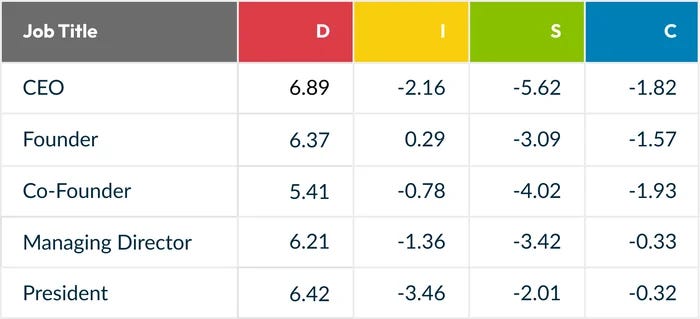
But the CEO job is a very different beast.
As CEO, you can’t just do the right things yourself. You have to get other people to do the right things. That requires continuous communication on what the company is trying to do, how it will accomplish this, and why it matters. The CEO can’t abdicate this responsibility or just hope people get it.
We live in a world where 23% of people in companies of 500 or more don’t even know their CEO’s name. So it’s unsurprising that almost twice that number (40%) can’t say what the company goals are either.
That is not a recipe for success. I talk to a lot of CEOs who feel like their organization is moving at half-speed. In my experience that’s not because employees aren’t working hard—it’s because they don’t understand how their work aligns with the goals of the company. In other words, they have not been communicated to clearly enough, and in a way that guides them to the most critical activities.
I talk to a lot of CEOs who feel like their organization is moving at half-speed. In my experience that’s not because employees aren’t working hard—it’s because they don’t understand how their work aligns with the goals of the company.
Why the Typical CEO Neglects Their Comms Role
Here’s what often happens in the mind of the (D)ominance-style CEO who underestimates the value of abundant communication to the team:
“People just want me to get out of the way so they can do their jobs.” Most D-types do in fact prefer to get down to work without a lot of explanation or guidance. However, it’s estimated that only 9% of people are Ds. They just happen to be over-represented in executive roles, especially CEO. The typical employee does want and need more than vague and occasional guidance from top leadership. When that’s all they get, it creates lack of clarity… which creates significant stress.
“People know what to do. They don’t need me to blather on about it.” Unless your workforce hears from you about what the company is trying to achieve, they will tend to break out into locally optimized groups that each do their own thing. With no unifying message, silos develop, friction between groups grows, customers get inconsistent experiences, and you stay moving at half-speed.
“I don’t want to repeat myself.” Ask any communications professional and they will tell you that repetition is key to imparting ideas at scale. People need to hear things consistently for them to sink in, and it will feel to you like you’re repeating things—the vision, the goal this quarter, the impression we want to leave with customers—over and over. Don’t worry about people thinking you’ve gone senile. Repeat yourself. And consider that leaders are “10 times more likely to be criticized for under-communicating than for overcommunicating.”
How to Be a More Communicative CEO
Here is some quick guidance on how to ensure you’re fulfilling the communications aspect of your role:
Distill the message into a 1-Page Strategic Plan. The most vital messages the CEO communicates are the company’s mission and vision, its differentiating values, its strategic objectives (next 2–3 years), and its near-term goals (next quarter). Consolidate these on one sheet of paper, put a copy in every employee’s hands, and make sure you talk about it continuously. Simply doing this will help your organization take great strides forward quickly. Get my short guide and example here.
Use consistent comms channels. Whether it’s a regular town hall, messages on an all-company Teams or Slack channel, recorded video messages, or some combination of these or other tools, aim to stick to a regular cadence of companywide communication.
Be visible. Walk around. Meet people where they work. Say hello in the hallway. Even if it’s through digital media, let people see you in action.
Ask for input. The CEO at scale has to communicate to hundreds or thousands at once, but that doesn’t mean they cannot ask for feedback. Ask questions of employees at all levels and then listen, really listen, to what they tell you. What can you learn that will help you hone communications in the future.
As we head into 2025, I urge you to consider whether you have clearly communicated to your organization everything they need to know to operate at full speed.
If you are a CEO and would like to learn more about how to communicate effectively to employees at scale, set up a time with me to discuss.
At the very least, make sure they know your name.